
Thessaloniki is one of those cities where food shows up before your plans do.
You notice it early. A bakery window already half empty — not because it just opened, but because you’re already late. Someone moving fast with a paper-wrapped pastry in one hand. Sesame rings stacked higher than they need to be. You cut through a market lane, catch olives first, then spice, then fish, then coffee, then something hot and fried a few steps later. It changes that quickly.
This isn’t the kind of city where you need a perfect list first. Thessaloniki makes more sense in layers. What people grab in the morning. What appears around the markets. What pulls you into a short stop. What turns into a longer table than you meant to sit at. What still sticks in your head after the trip is over.
And it helps before booking a food tour too.
Once you know which foods actually carry the city, tours stop looking like the same walk with slightly shuffled wording. You start catching the real shape of them. Some stay quick and portable. Some move through the markets. Some slow down for sit-down plates and more talk. The food gives that away before the route does.
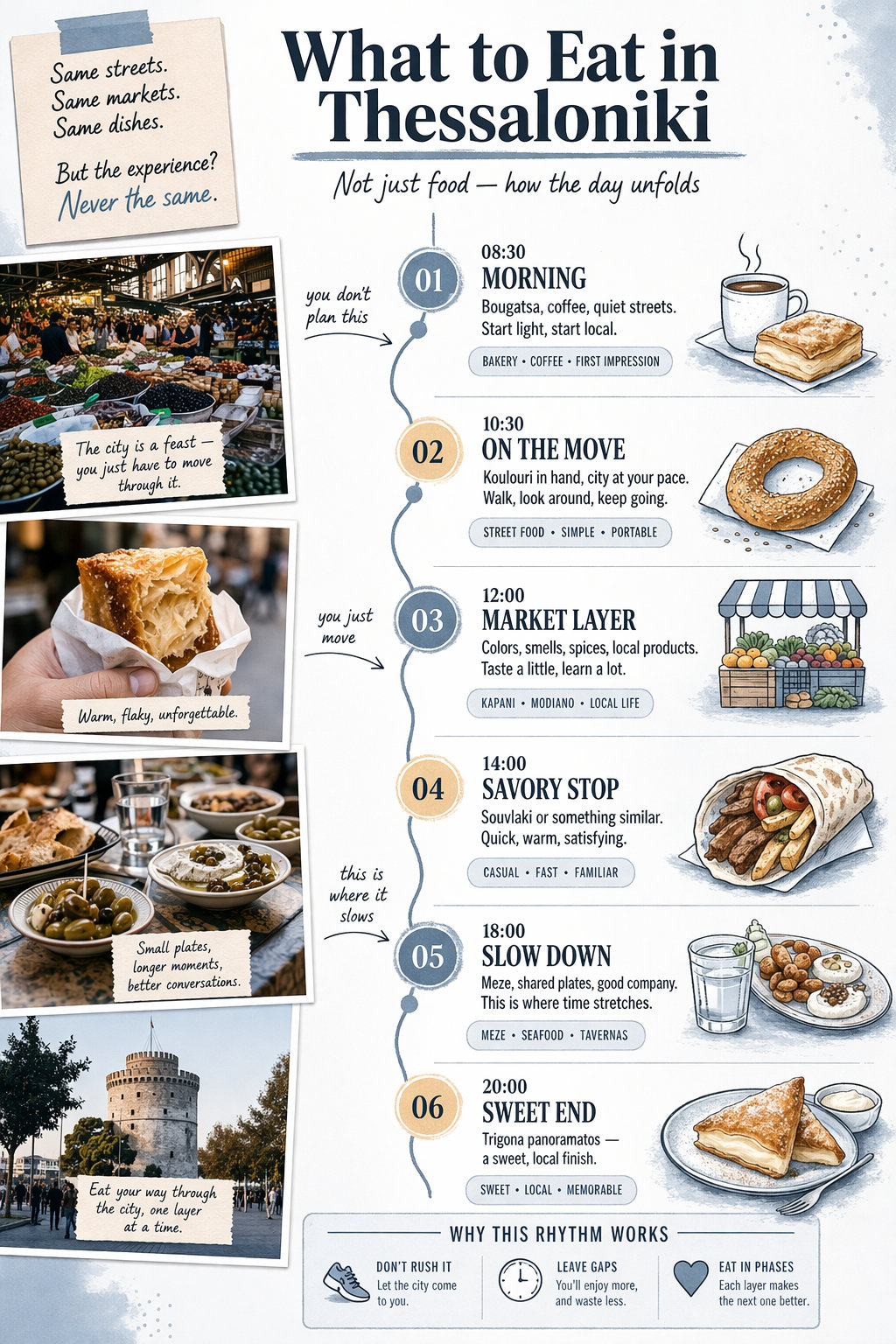
Start with bougatsa, koulouri, one quick savory stop like souvlaki, a proper meze meal, and trigona panoramatos. That gets you the breakfast layer, the everyday street rhythm, the casual lunch side, the slower social food culture, and one sweet that actually feels tied to Thessaloniki rather than just generally Greek.
What food is Thessaloniki known for?
The short answer isn’t just “Greek food.” That doesn’t tell you much once you’re actually there.
Thessaloniki is known for foods that fit movement. Pastries you eat standing outside a bakery because going back inside for a table would feel unnecessary. Bread rings you carry without thinking. Small market bites. Sweets with local weight behind them. Plates that make you sit down “for twenty minutes” and somehow keep you there much longer.
The city doesn’t hang everything on one giant signature dish.
It builds through rhythm.
That’s why some of the foods that matter most can look almost too simple at first. Bougatsa doesn’t perform. Koulouri definitely doesn’t. Even souvlaki, familiar as it is, lands differently once it becomes one piece of a longer day that runs through bakeries, markets, coffee, sweets, and meze later on.
So if you’re trying to figure out what really matters in Thessaloniki, start with the foods that keep appearing in daily life. Not the ones that sound biggest in a neat list.
| Food | What it is | Best time to try it | Style | Why it matters |
|---|---|---|---|---|
| Bougatsa | Layered pastry, sweet or savory | Morning | Bakery / street breakfast | One of the clearest ways into the city’s everyday food rhythm |
| Koulouri | Sesame bread ring | Morning or on the move | Street snack | Simple, local, portable, and easy to miss if you only look for bigger meals |
| Souvlaki | Quick grilled meat wrap or plate | Lunch or later in the day | Casual savory stop | Part of the fast, practical eating layer without carrying the whole city by itself |
| Meze | Small shared plates | Lunch or evening | Sit-down meal | Shows the slower, more social side of Thessaloniki food culture |
| Trigona Panoramatos | Cream-filled triangular pastry | Afternoon or dessert stop | Sweet specialty | Adds a distinctly local sweet layer to the bigger food picture |
Bougatsa comes first for a reason
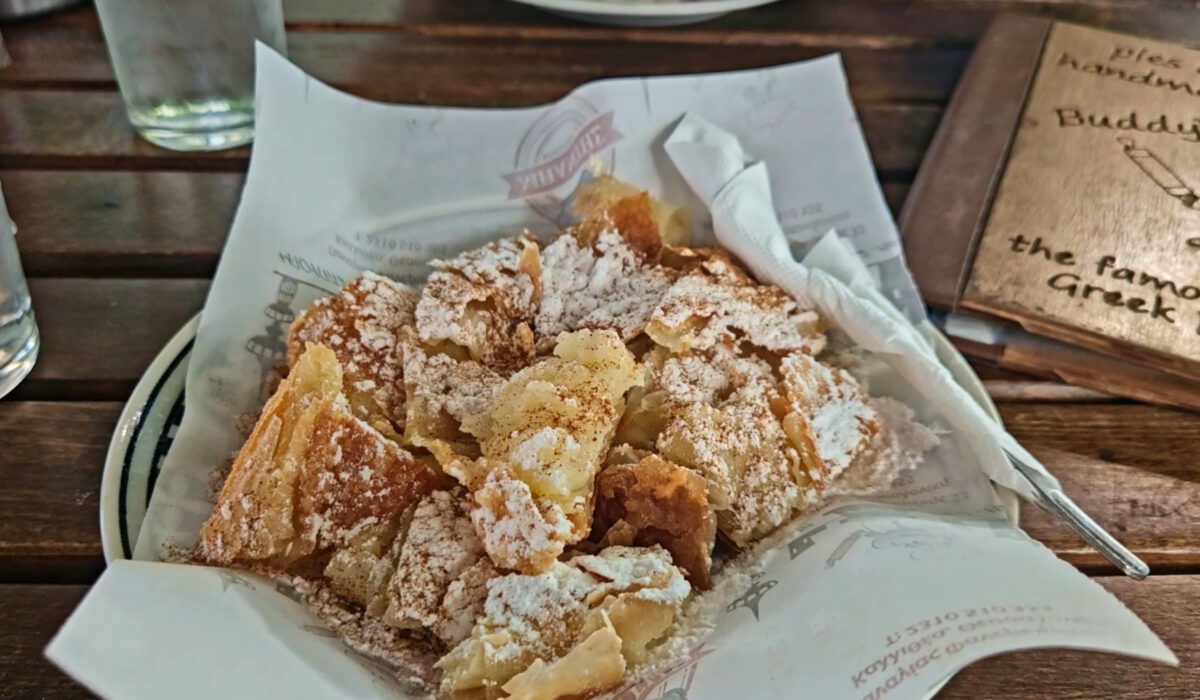
If you arrive in Thessaloniki and try to understand the city through food, bougatsa gets you there fast. It doesn’t need a formal setting. It doesn’t need build-up. You buy it, step outside, stand somewhere nearby with the paper still warm in your hands, and the city suddenly feels more specific.
That’s part of why it matters.
Bougatsa becomes important because of how naturally it fits here. Early breakfast. Quick stop before the market. Something warm when the streets still feel like they’re waking up properly. It feels local without turning the moment into a performance.
There are sweet versions and savory ones, and that matters more than it sounds. It means bougatsa isn’t locked into one mood. It can be light, filling, slightly messy, rushed, quiet. You can eat it leaning against a wall for two minutes or make it the start of a slower morning with coffee after.
For a first-time visitor, it also resets expectations a little. Thessaloniki food isn’t only about finding the right “traditional” table and ordering a full meal. A lot of the city opens through smaller, faster, less formal things first.
This is one of those foods that lands hardest in the morning, when shutters are still opening and the city feels like it’s still putting itself together. Later, you can still find it. It just doesn’t hit quite the same.
Koulouri is simpler than bougatsa — and that is exactly the point
Koulouri is easy to dismiss.
You look at it and think: fine, a sesame bread ring. Good, probably. Something small. Maybe something you buy once because it’s there and then forget about.
Then Thessaloniki keeps putting it in front of you.
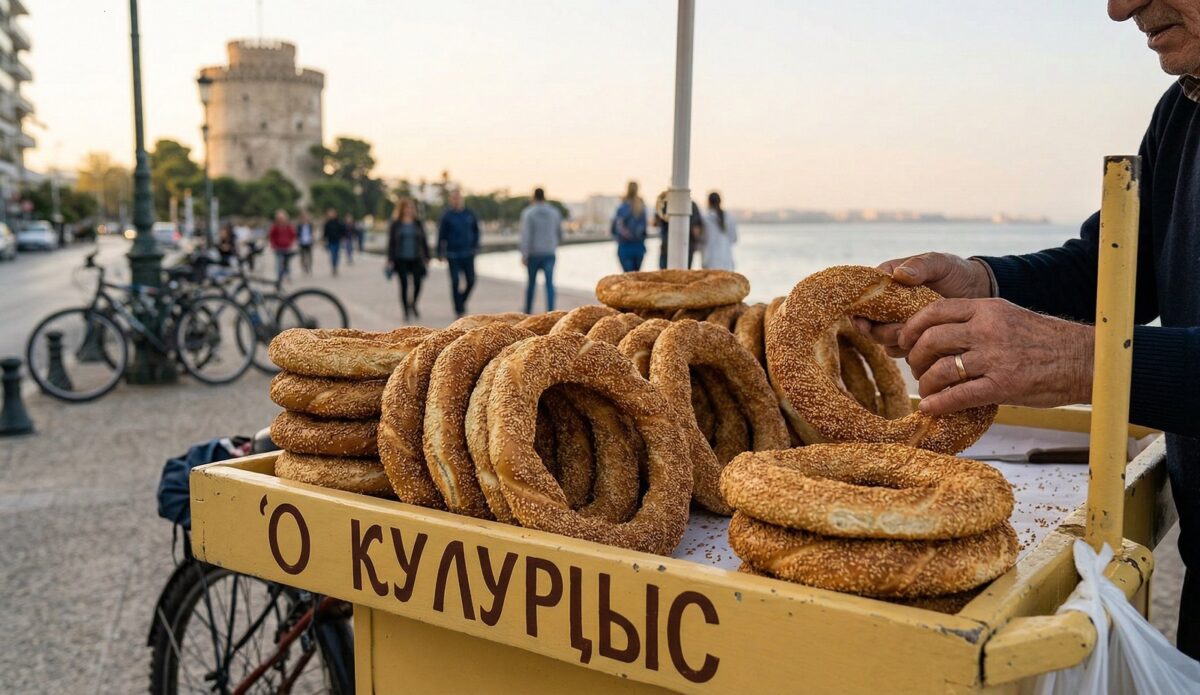
Someone carrying one with coffee. Someone else tearing pieces off while crossing the street. A stack near a bakery counter that’s clearly moving fast without needing any help from you. You walk another ten minutes and there it is again.
After a while, you notice what’s happening.
This isn’t filler. It’s one of the cleanest examples of how the city actually eats when nobody is trying to stage anything for visitors.
Koulouri matters because it’s so unforced. It fits mornings, short walks, market detours, the stretch between one stop and the next. It doesn’t ask you to stop your day. It goes with it.
That also makes it useful when you’re thinking about food tours. Some tours are built around tastings that feel structured and explained. Others make more sense once you already understand that part of Thessaloniki’s food identity is portable, quick, and almost too ordinary to market properly. Koulouri sits right there.
Street food in Thessaloniki is broader than it looks
It’s easy to come in thinking street food here means one thing. Something grilled, wrapped, fast, cheap, done.
You can eat that way in Thessaloniki, obviously.
But the street-food layer is wider than that. More textured too.
Bakery food matters. Portable breakfast matters. Small savory things matter. Bites grabbed near the markets matter. Coffee next to something flaky matters. A sweet stop in the middle of the day matters too, sometimes more than another heavy lunch when you’ve already been walking longer than planned.
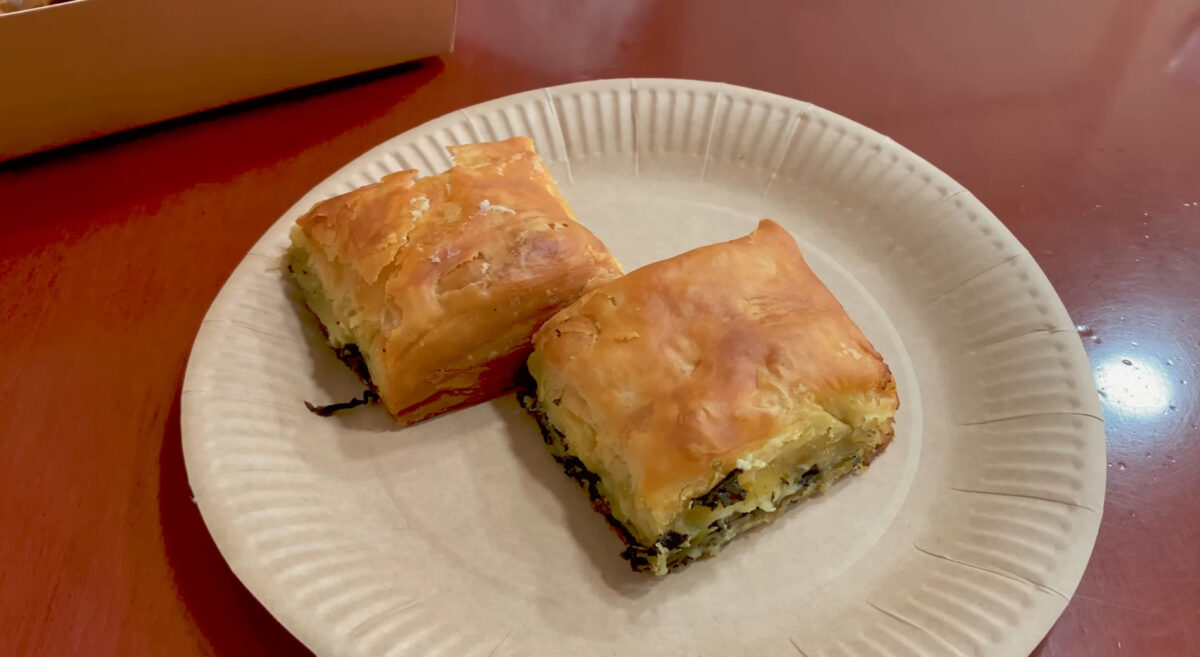
That broader shape is a big part of why Thessaloniki feels strong as a food city even when the dishes themselves aren’t always complicated. It’s not just what ends up in front of you. It’s how naturally one thing slides into the next.
- BougatsaThe pastry that makes the morning feel local almost immediately.
- KoulouriThe simplest version of Thessaloniki street rhythm.
- Quick savory pastriesUseful for seeing the city beyond the usual grilled-food cliché.
- SouvlakiStill part of the picture, just not the whole picture.
That’s worth remembering when you start comparing food experiences later. A casual street-food route and a market-led route can both be food tours, but they aren’t showing you the same slice of Thessaloniki. One may stay portable and quick. Another may build through markets, pauses, and longer eating.
Knowing the food first makes that easier to see.
What the markets add to the food experience
At some point, food in Thessaloniki stops feeling like a list.
You’re walking, maybe checking your phone for the next spot, and then you drift into a market without planning it. Suddenly you’re not choosing dishes anymore. You’re inside them.
Fish laid out in rows. Olives — darker, lighter, almost purple. Someone scooping spices that hit before you even see where they’re coming from. Bread stacked, sweets tucked into corners, cheese behind glass you lean a little closer to.
You don’t stop moving.
That’s the shift.
You’re not ordering. You’re passing through things. Slowing down for a second, then moving again because someone steps behind you or the path narrows.
It doesn’t look like much at first. Then it starts connecting.
You notice why bougatsa shows up early in the day. Why small savory bites keep appearing between longer stops. Why sweets don’t feel like a final act — more like something that keeps threading through everything else.
You might not sit down for a full meal here. Probably won’t.
Still, something clicks.
Later, when you eat the same kind of pastry or a small plate somewhere else, it lands differently. You’ve already seen where it comes from.
Seeing the ingredients, the repetition, the way people move between stalls — it stays with you. The same dish later doesn’t feel separate anymore. It feels connected to something you already walked through.
Souvlaki and the quick savory layer
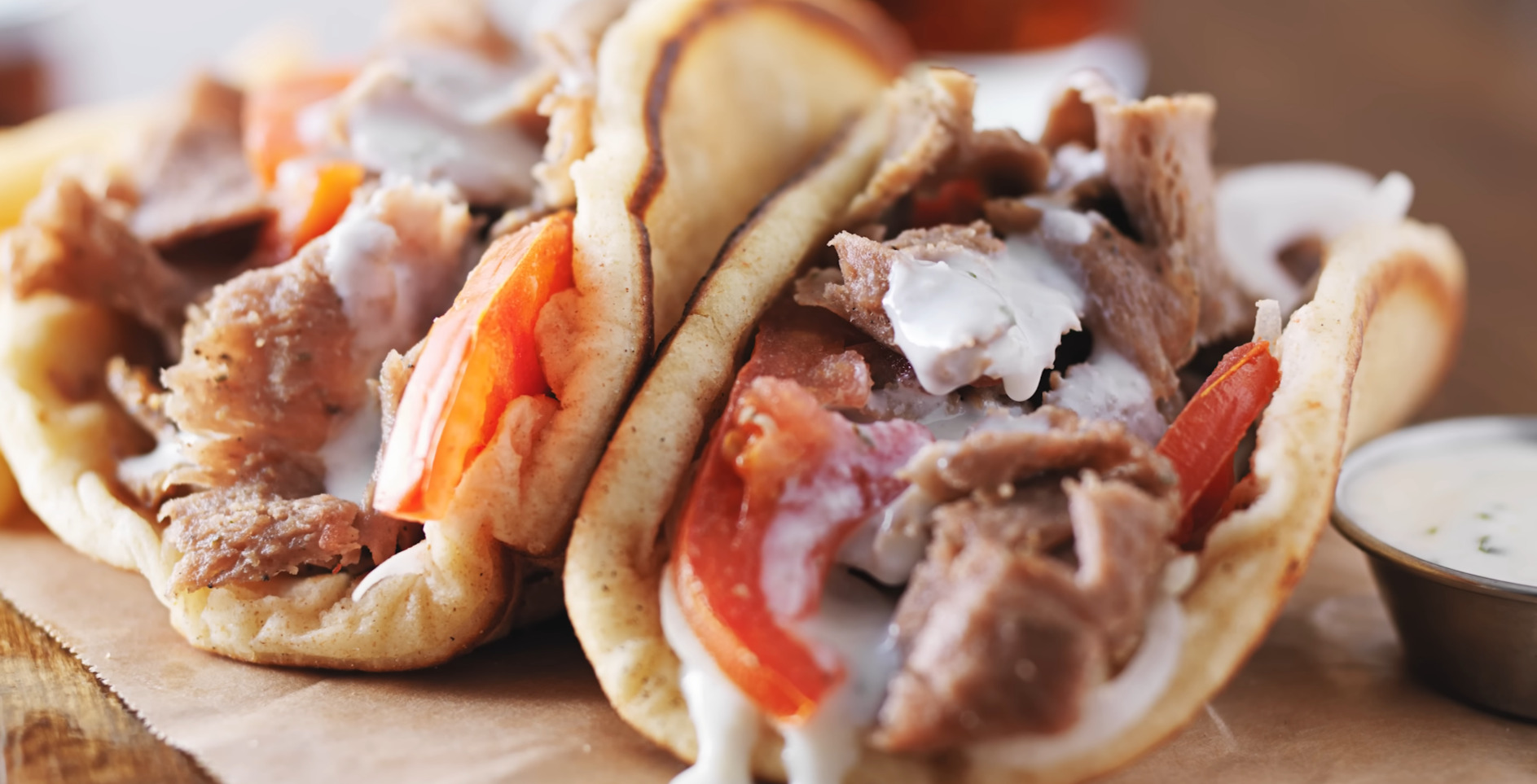
Souvlaki is easy to spot before you even arrive.
And once you’re there, it’s everywhere.
You grab one between stops. Eat it standing, maybe leaning slightly against a wall, watching people pass. It’s quick. It works. Then you’re moving again.
It fits the pace.
But it’s not really the center of the day.
If you keep going back to it, you start missing how everything else builds around it. The lighter things. The slower ones. The ones you didn’t plan but ended up sitting for anyway.
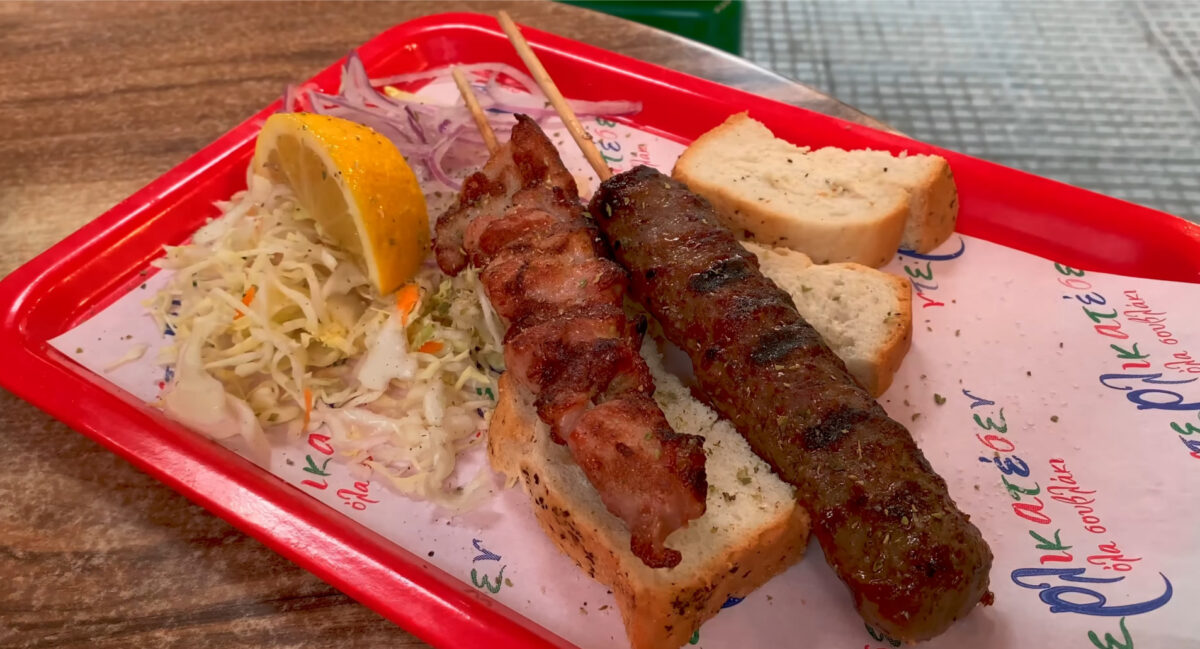
Souvlaki makes more sense in between.
- Use it as a bridgeYou grab one while moving from one area to another, not as a main stop.
- Keep it simpleNo need to turn it into something bigger than it is.
- Pair it with movementIt works best when you’re still walking, still figuring out where to go next.
You notice it on food tours too.
Sometimes it’s there, quick stop, quick bite. Other times it’s skipped completely, replaced with something slower or something sweeter. It shifts depending on how the route moves.
Meze, tavernas, and slowing the day down
At some point, you stop walking as much.
You don’t really plan it. You just sit.
A table outside, maybe a bit noisy, maybe not. You order something small. Then something else. Someone suggests one more plate. You weren’t planning to stay long.
You stay.
That’s where meze comes in. Not as a single thing. More like a rhythm that pulls you in slowly.
Plates arrive one after another. You try something, then reach for something else without thinking too much about it. Drinks stretch the time out. You stop checking directions completely.
The pace changes.
Earlier, you were moving between places. Now everything happens at the table.
You don’t need a list here.
You just follow what shows up.
Skipping this part leaves something unfinished. You feel it later, even if you can’t quite explain it.
Trying to do too much at once flattens it. Thessaloniki works better when the food spreads out — lighter earlier, slower later, with space in between.
Trigona panoramatos and the sweet layer that actually matters
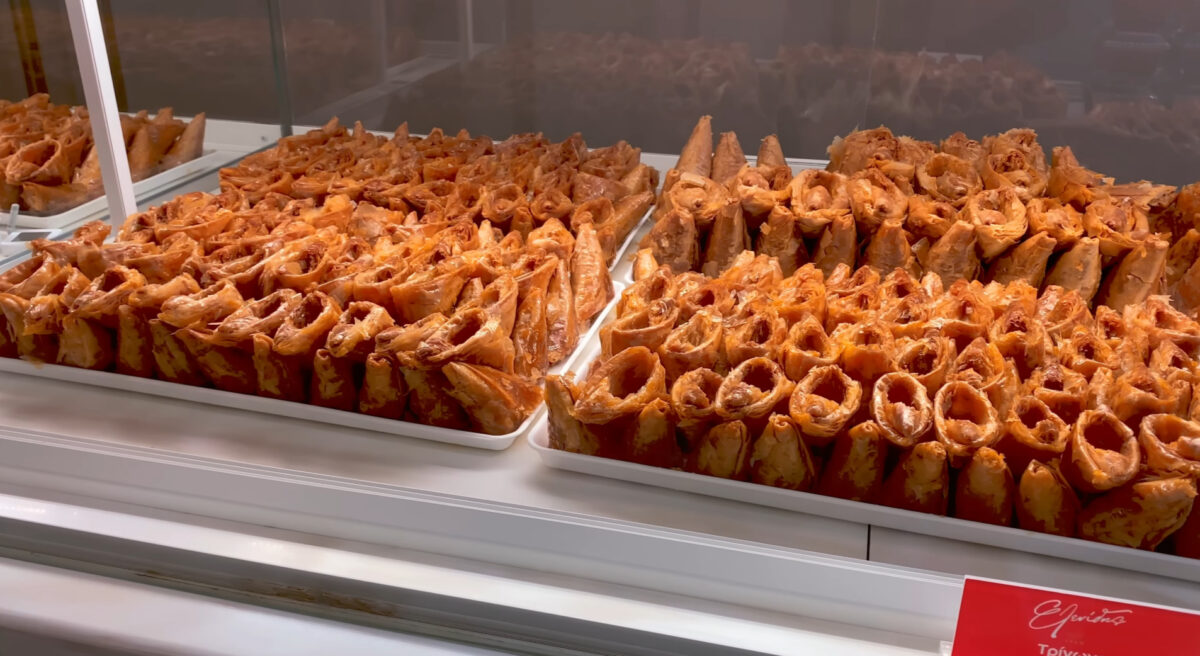
Some desserts just sit there in a display.
This one doesn’t.
You notice it even before you decide to try it. Crisp edges, filled inside, a bit messy when you bite into it. Syrup, cream, layers that don’t stay perfectly in place.
It’s not subtle.
And it works better later.
After you’ve already walked through the markets. After something savory. Maybe after sitting longer than planned at a table.
By then, something sweet doesn’t interrupt anything.
It fits.
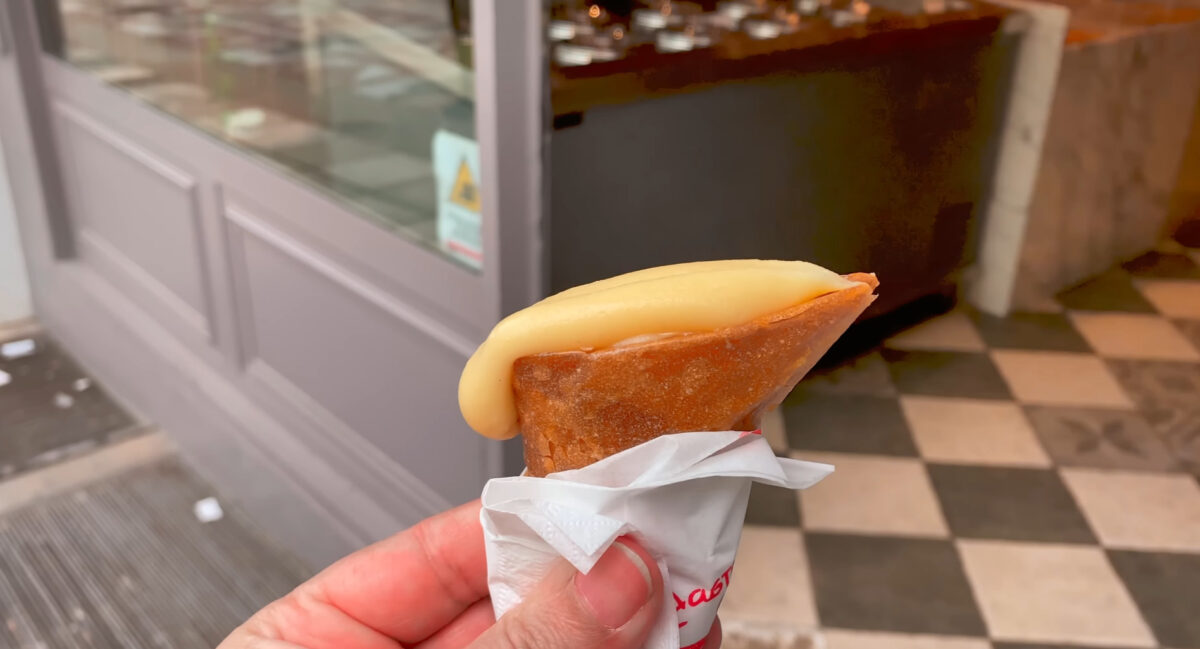
You don’t need a long list of desserts here. One or two is enough.
As long as at least one feels like it belongs to the city, not just something you happened to find.
Putting it together: how the day usually unfolds
If you step back for a second, you start to see the pattern.
Morning is light. Coffee, pastry, something quick you eat without stopping for long.
Then you move. Streets, markets, small stops. You pick things up without planning each one. Sometimes you check directions. Sometimes you don’t bother.
You walk a bit longer than expected.
Hunger shifts.
You stop for something more filling, but not too heavy. Then you keep going. Maybe you get slightly lost, turn into a street you didn’t mean to take, end up somewhere that works anyway.
Later, you slow down.
You sit. Stay longer than planned. Order more than you thought you would.
Somewhere in between, something sweet slips in.
It doesn’t need to be structured like that.
It just happens.
And once you notice it, you stop trying to control it so much. You just follow it — loosely, without forcing each step.
That’s when the food in Thessaloniki starts to feel like part of the city, not something separate from it.
What to eat first if you only have a short trip
If you’ve only got a day or two in Thessaloniki, trying to “cover” the food usually falls apart pretty fast.
You start strong. Open a map. Pin a few places. Then you walk ten minutes, smell something warm from a bakery, stop early… and the plan’s already off.
It works better if you just touch a few layers and let the rest happen around that.
-
Start with something from a bakery
You grab a bougatsa or a koulouri, still warm, eat it standing or on the move. No sitting, no delay — you’re already in the street. -
Drift through a market before lunch
You don’t need a route. You walk in, slow down, maybe circle once without buying anything. Then something pulls you back and you pick a small bite. -
Add one quick savory stop
At some point you realize you’re actually hungry. You check the map, ignore it, follow a smell instead. Souvlaki, eaten fast, half-standing. -
Wait before sitting down properly
You think about lunch early… then skip it. Keep moving. When you finally sit for meze, it feels earned. -
End with something sweet, but not too early
Trigona works best when the day’s already stretched out a bit. You notice it more when you’re slowing down.
At some point you stop checking what’s next.
You just follow what’s in front of you.
Best foods to focus on for a first visit
- Bougatsa — you grab it almost without thinking
- Koulouri — simple, everywhere, easy to eat while walking
- Market tastings — bits and pieces that start to connect
- Souvlaki — quick, filling, no pause needed
- Meze — when the pace finally drops
- Trigona panoramatos — sweet, but better later
How this helps you choose a food tour
You notice it after a few stops.
Not all food tours feel the same, even if they list almost identical things.
One keeps you moving — short stops, quick bites, barely time to finish before you’re pulled forward again. Another slows everything down. You sit longer than expected. Talk more. Look around.
Same city. Same foods. It doesn’t feel the same.
If you’ve already eaten a bit on your own, it’s easier to spot what each tour is trying to do. You recognize the rhythm. You can tell if it’s fast, stretched, or somewhere in between.
Otherwise, it all blurs together.
| If you’re interested in… | What usually fits better | Why |
|---|---|---|
| Markets and local products | Open market-style tours | They move the way you just did — in and out, stopping where it feels natural |
| Quick bites and casual eating | Street food-focused tours | Less sitting, more movement, food that fits in your hand |
| More context and explanation | Guided food tours | You pause longer, hear more, connect pieces you might’ve missed earlier |
| A slower, more private pace | Small group or private formats | Fewer people, longer stops, you don’t feel pushed along |
It doesn’t really come down to better or worse.
Just a different kind of day.
- Best tours → see options
- Street food tours → see casual tours
- First-time → start here
- DIY route → see route
FAQ
What food is Thessaloniki most known for?
Bougatsa shows up first for a lot of people. Then koulouri, market snacks, meze, and sweets like trigona — usually later in the day.
Is Thessaloniki good for street food?
Yes, but it’s not just takeaway counters. Bakeries, markets, quick stops — you end up eating while moving more than you expect.
What pastry is Thessaloniki famous for?
Bougatsa is the one you notice early. Trigona comes later — and somehow sticks more.
Can you eat well in Thessaloniki without a tour?
Yes. You’ll wander at first. Miss a few things. Double back.
Are food tours still worth it if you already know what to try?
Often, yes. Not just for the food — for how the stops connect and how the day flows from one to the next.