

You notice it fast in Thessaloniki — people don’t really stop everything just to eat.
They carry it. Something warm in paper. Something quick. A sesame ring, a piece of pastry, something salty wrapped and gone in a few bites. You see it while crossing the street, while checking directions, while waiting for someone who’s already halfway through theirs.
That rhythm pulls the tours with it.
A street food tour here doesn’t feel like a slow meal stretched across places. It feels closer to how the city feeds itself during the day. Short stops. Small bites. You turn a corner, smell something, stop, eat, move again before it settles too much.
You don’t really arrive anywhere.
You keep moving through it.
Thessaloniki street food tours usually run 2.5–4 hours and stay inside the city center. You walk, stop often, eat small local foods — pastries, bakery items, quick savory bites, a few market tastings. Not much sitting. It’s lighter, faster, easier to follow, especially if you’ve just landed and don’t want to overthink anything yet.
- Best tours → top options
- Market vs street → see difference
- Prices → cost guide
- First-time → start here
What a Street Food Tour in Thessaloniki Actually Feels Like
It usually starts quietly.
A meeting point somewhere central. You might check your phone once to make sure you’re in the right place, then look up and realize it’s obvious. A small group gathers. No big setup. Someone says a few words, and you’re already walking.
The first stop comes fast.
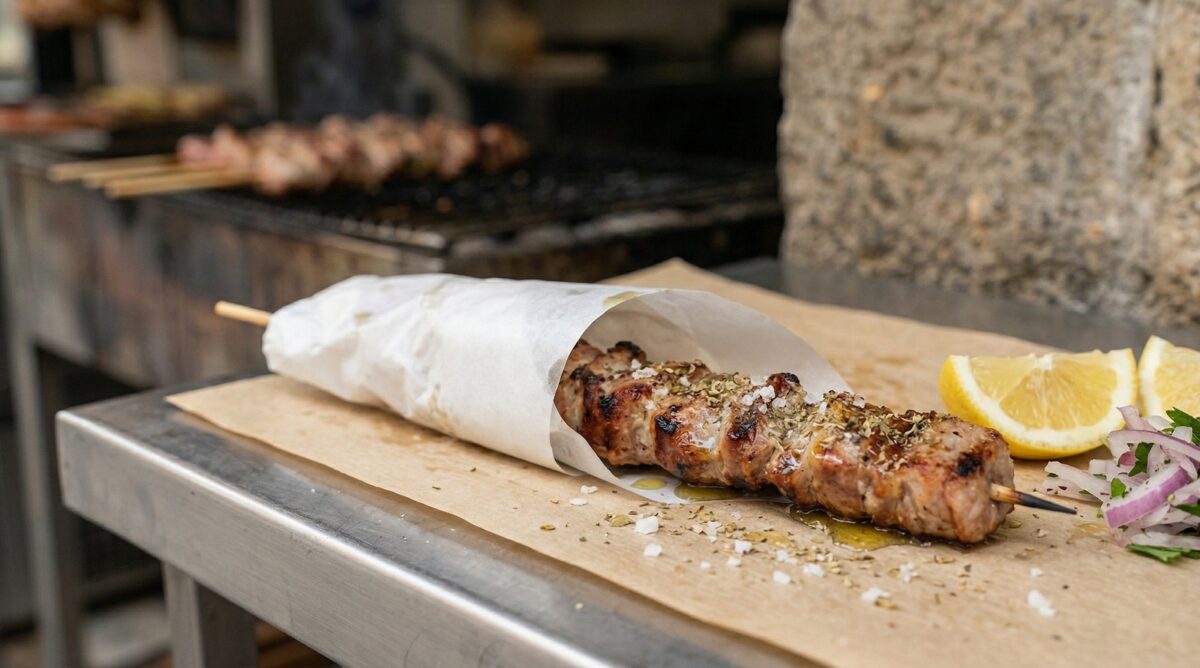
Something simple. Bread, pastry, something handed over in paper. You take a bite while standing half out of the way because people are still passing behind you. A short explanation, maybe. Then you’re moving again before it turns into a pause.
That pattern stays with you.
Walk. Stop. Eat. Move.
The stops don’t feel like destinations. More like interruptions in the street. A counter. A tray just pulled out. A narrow interior you step into for a minute, then back out again because the next place is already a few steps away.
This isn’t a long sit-down experience. You won’t spend half an hour in one place. It’s built around movement — eating what people grab during the day, not what they plan ahead.
What You Actually Eat on a Street Food Tour
The food doesn’t feel random once you start noticing the pattern.
You’re not getting a broad “Greek cuisine” overview. You’re getting things that make sense to eat quickly, locally, without much setup. Things that exist because people here eat between places, not just at them.
| Food stop | What it is | Why it shows up on tours |
|---|---|---|
| Koulouri | Sesame bread ring sold on the street | You see it everywhere. Cheap, fast, easy to carry. Often shows up early in the route. |
| Bougatsa | Flaky pastry with cream, cheese, or meat | Warm, filling, easy to portion. You usually eat it standing a few steps from the shop. |
| Market tastings | Olives, cheeses, small deli-style bites | Breaks things up without slowing everything down too much. |
| Quick savory bite | Something hot, salty, simple | Balances the pastries without turning the stop into a full meal. |
| Sweet stop | Dessert or pastry finish | Usually lighter, something you eat while already thinking about the next move. |
| Drink | Coffee or local beverage | Not always included, but when it is, you feel the pace slow for a minute. |
What matters isn’t just what shows up.
It’s how quickly it changes.
You don’t sit with one thing long enough to get used to it. You take a few bites, wipe your hands, look up, and the group is already turning the corner. One taste doesn’t replace the last one. It cuts across it.
That’s what gives it that street feel.
How the Route Usually Moves Through the City
Most routes stay tight.
You’re not covering distance. You’re staying inside a dense part of the city where everything overlaps — bakeries, markets, counters, old streets that seem to fold into each other.
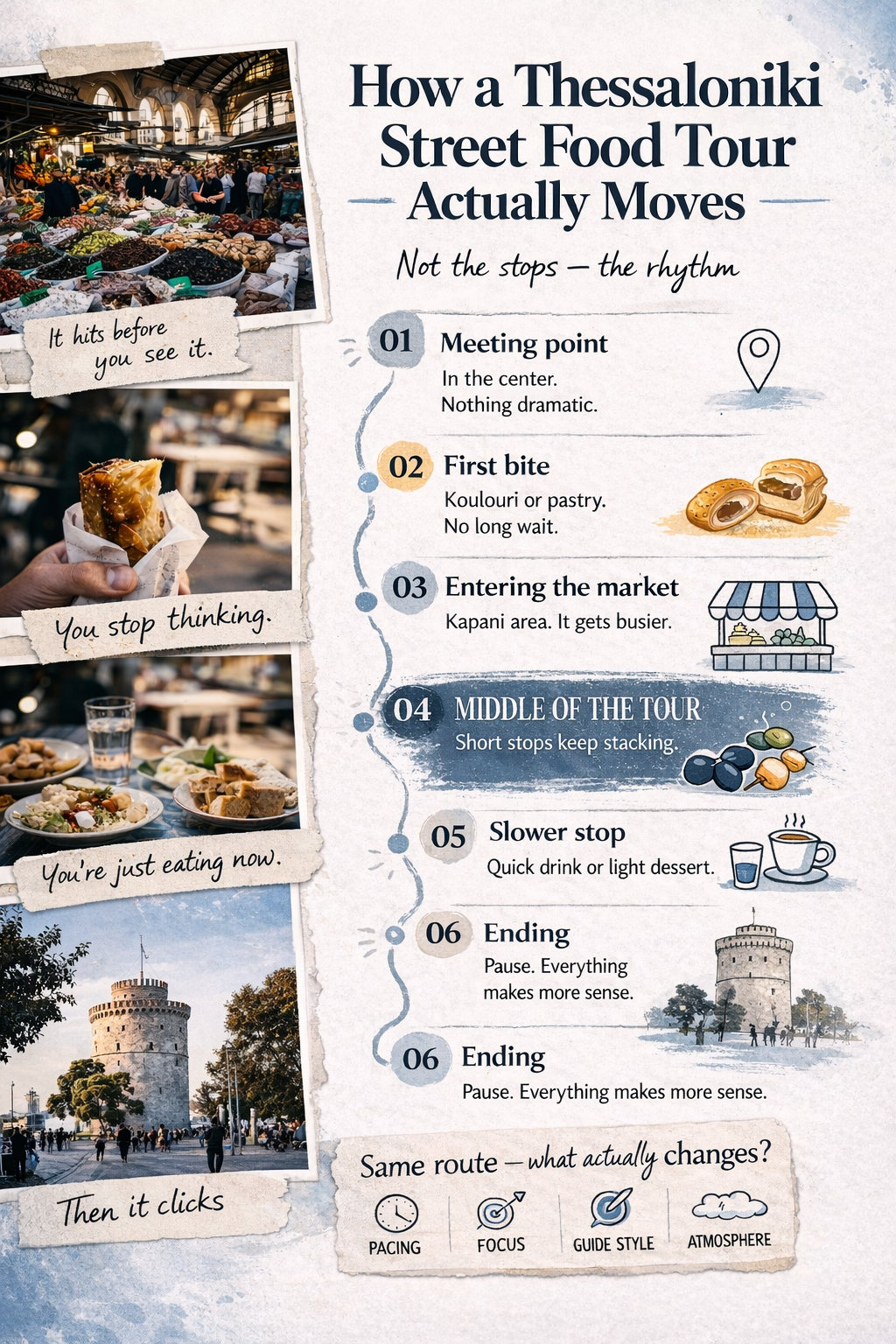
This is what most listings don’t show clearly — not the stops, but how the pace shifts as you move through the city.
It’s not about how far you go.
It’s about how much is packed into a small area.
- Start near the centerEasy to find, easy to get your bearings.
- First quick biteSomething immediate — no waiting, no setup.
- Move into busier streetsYou start weaving a bit more, stepping aside, adjusting your pace.
- Enter the market zoneSmells shift quickly, choices stack up, you stop more often.
- Layer small tastingsSeveral short stops close together instead of one long one.
- Ease off at the endMaybe a drink, maybe something sweet, maybe just standing still a bit longer than before.
When it works, it doesn’t feel like a checklist. It feels like the city pulling you forward. If stops feel disconnected, you notice it immediately.
Street Food Tour vs Market Tour vs Classic Food Tour
The names sound close.
The experience shifts once you’re inside it.
| Format | How it moves | What you get | Who it fits |
|---|---|---|---|
| Street food tour | Fast, frequent stops | Pastries, quick bites, light tastings | Short stays, first-time visits, lighter appetite |
| Market tour | More focused, slightly slower | Products, stalls, deeper context | People who want to understand how the food system runs |
| Classic food tour | More structured | Larger tastings, sometimes seated stops | Those looking for something fuller and more settled |
It’s not really about ingredients.
It’s about pace.
Street food tours keep you moving. Market tours keep you looking around longer. Classic tours make you stay put for a while.
Who These Tours Fit Best
Some people fall into this rhythm right away.
Others feel slightly pushed along, like the city is moving a bit faster than they expected.
You notice it within the first 20 minutes.
Street food tours in Thessaloniki work best when you’re okay not sitting down for long. You eat, move, stop briefly, then move again. It keeps going.
- First-time visitorsYou don’t need to plan anything. You follow, you eat, you start recognizing streets without trying too hard.
- Short staysIf you’re only here a day or two, this fits easily without taking over your schedule.
- Solo travelersNo awkward pauses. You’re always moving, always doing something.
- Couples who want something lightYou eat enough, but not so much that the rest of the evening disappears.
- People choosing between DIY and guidedYou skip the part where you stand on a corner checking maps, trying to decide where to go next.
Best fit
- Short, flexible city trips
- First day in Thessaloniki
- People who prefer movement over sitting
- Anyone trying to “read” the city quickly through food
Who May Want a Different Format
Not everyone enjoys this pace.
Some people want to stay longer in one place. Sit. Let things stretch out.
- Travelers who want depth over movementYou might prefer staying inside a market longer instead of passing through it.
- People looking for a slow, seated experienceSomething with fewer stops and more time at each table will feel better.
- Travelers who want full controlYou might find yourself wanting to change direction, skip something, or stay longer.
- Those expecting a full mealThis builds slowly — small bites, not one continuous plate.
Are Street Food Tours in Thessaloniki Actually Cheaper?
At first glance, yes.
Shorter time, simpler setup — it looks like the budget option when you scroll through listings.
Then you start looking closer.
Prices usually sit somewhere in the lower or middle range. But what you’re really getting isn’t just a lower number — it’s a different pace.
| Angle | What to expect |
|---|---|
| Price level | Lower or mid-range compared to private or chef-led tours |
| Why it can feel like better value | You keep moving, you taste more things, you don’t spend time waiting at tables |
| Where expectations slip | Less sitting, lighter portions, more walking than some expect |
“Cheap” shows up a lot when you search. It’s not really about being the lowest option. It’s lighter, easier to fit into a day, easier to say yes to without overthinking it.
What to Check Before Booking
Two tours can look almost identical online.
Then you’re halfway through one and it feels completely different.
- DurationShort tours move fast. Longer ones sometimes slow down near the end.
- Number of tastingsMore stops usually means quicker bites and less time at each one.
- Market involvementSome routes just pass through. Others actually pause inside.
- Seated stopNot always included — but when it is, you feel the shift.
- DrinksCoffee or something local can reset your pace without you realizing it.
- Walking intensitySome routes feel relaxed. Others keep you moving almost the whole time.
- Group sizeSmaller groups turn faster, adjust easier.
- Food balanceSome lean sweet, others mix things more evenly.
Is a Street Food Tour a Good Choice for Your First Day?
In a lot of cases, yes.
You don’t need to understand the city yet. You just follow along.
You walk, eat something small, turn a corner, recognize it later when you pass again. The map starts forming without effort.
You check your phone less after a while.
It also leaves space.
Because you’re not sitting through a long meal, the day doesn’t feel finished. You can still go out again, maybe return somewhere you passed earlier without noticing it properly the first time.
If you want something easy to step into — no planning, no long commitment — this works well right at the start of a trip.
DIY Street Food Route vs Guided Tour
You can do this yourself.
You open a map, save a few spots, start walking.
It works… for a while.
Then you pause at a corner, look at your phone again, try to decide where to go next. You walk a bit further than expected, double back, skip something because you’re not sure it’s worth it.
| Option | Strength | Weak point |
|---|---|---|
| On your own | Full flexibility, no schedule, complete freedom | Stops can feel scattered, harder to build a clean flow |
| Guided street food tour | Clear movement, local insight, steady pace | Less control over timing and stops |
You feel it halfway through.
Either things connect naturally, or you start second-guessing your route.
What Makes a Strong Street Food Tour Listing
Descriptions can blur together.
Then you notice small details that actually matter.
- Clear routeYou can picture how it moves, not just what you’ll eat.
- Specific food referencesReal items, not just vague “local tastings.”
- Balanced pacingSome quick stops, maybe one slower moment.
- Visible inclusionsYou know what’s actually covered — food, drinks, number of stops.
- Central focusRoutes staying in the core tend to feel smoother.
Good street food tour signs
- The route is easy to imagine
- The food sounds real, not generic
- The pacing feels intentional
- The stops connect into something that flows
FAQ
Are Thessaloniki street food tours worth it?
If you want a quick way to move through the city while eating along the way, yes. The value shows up in how the route fits together as much as in the food itself.
What do you eat on a street food tour in Thessaloniki?
Usually pastries, bread-based snacks, small savory bites, sometimes market tastings. You eat standing, walking, pausing briefly.
Are street food tours cheaper than regular food tours?
Often they sit lower in price, but the bigger shift is in how they run — faster, lighter, less time sitting.
Are these tours good for first-time visitors?
Yes. You start recognizing the center quickly without needing to plan anything yourself.
Do street food tours include markets like Kapani or Modiano?
Many pass through those areas or nearby streets, even if they don’t focus entirely on them.
Will I get enough food on this kind of tour?
You’ll feel satisfied, but it’s built from smaller bites rather than one full meal.
Are Thessaloniki street food tours good for solo travelers?
Yes. You’re always moving, always part of something, so it doesn’t feel awkward.
Can vegetarians do a street food tour in Thessaloniki?
Often yes, though it’s worth checking what kinds of stops are included before booking.
Final Thoughts
Street food tours here don’t try to impress with size.
They stay close to how the city actually eats.
Quick stops. Small decisions. Constant movement.
If that rhythm works for you, it clicks fast.
If you’re looking for something slower, more fixed — another format will probably feel better.
But if you want to understand the city quickly, through what people grab and eat without stopping for long, this is one of the easiest ways in.
- Best tours → top options
- Market vs street → see difference
- Prices → cost guide
- First-time → start here