

At first, Thessaloniki food tours all blur together.
Same streets. Same markets. Same dishes showing up in different wording. You open five tabs and it feels like you’re picking between slightly edited versions of the same walk.
One tour keeps you inside the market long enough that you stop looking at it as a “place to visit” and just start moving through it. Another barely stays — quick stops, then back out into the streets. One feels loose, like you’re drifting with a small group. Another slows everything down, pauses at each stop, talks through what’s on the table.
You only notice it once you’re halfway through, already holding something warm, trying not to drop it while checking where the group went.
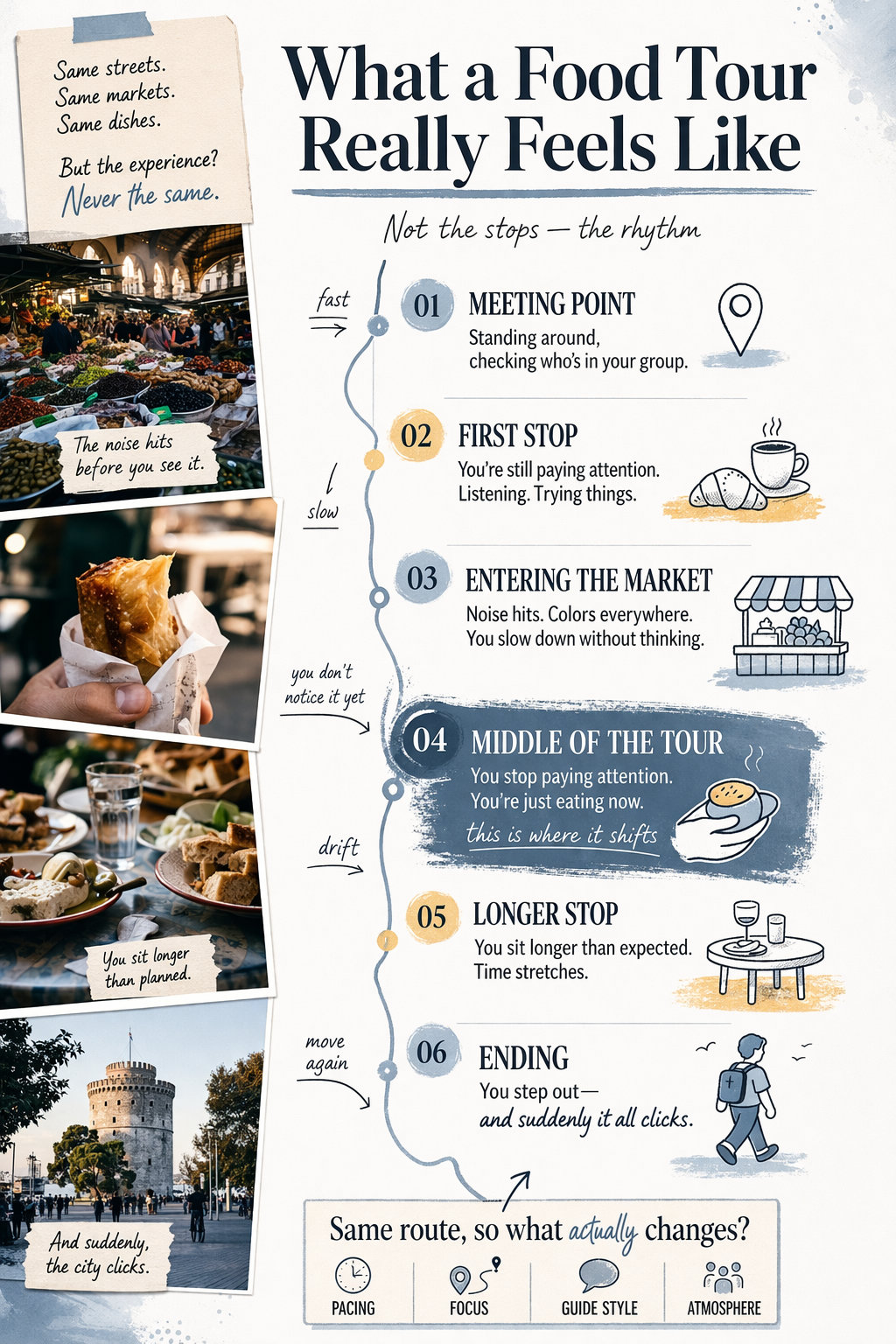
So instead of treating Thessaloniki food tours like a ranked list, it makes more sense to look at how they actually run — how they move, where they pause, how the hours stretch or don’t.
Don’t rush to pick “the best” tour. Start with the kind of day you want — faster, slower, more structured, more open. Then narrow it down. The right fit usually shows up after that.
- Compare prices → cost guide
- Market vs street → compare
- Street food tours → see options
- First day → start here
- Market tours → see how they work
- Street food tours → casual option
- Private tours → premium experience
- Do it yourself → route guide
Thessaloniki Food Tours at a Glance
The center is tight.
You don’t really travel far. You circle. Markets, side streets, small squares, back again. After a while, you start recognizing corners without thinking about it.
That’s why tours feel similar at first glance.
But then you notice how differently they use the same ground. One loops tightly. Another stretches outward. One keeps stopping. Another barely pauses.
| Tour type | Typical duration | Typical price | Route shape | Best for |
|---|---|---|---|---|
| Open-market food tour | About 3 hours | Lower to mid range | Compact loop through central markets | First-time visitors |
| Street food tour | 2.5–3 hours | Mid range | Faster walk across central streets | Short stays |
| Chef-led / gastronomy tour | 3.5–4 hours | Mid to upper range | Slower route with longer stops | Food-focused travelers |
| Private food tour | Flexible | Upper range | Adjustable route and pacing | Couples / small groups |
Market tours usually feel denser right away. You step under the covers, the noise hits first, and the route tightens around the market itself. Street food tours breathe more. There is more walking between stops, more air in the route, less time spent inside one concentrated area.
Longer gastronomy formats stretch the same ground over more time, with more explanation and longer pauses. Private tours often overlap with the same general route, but the pacing shifts immediately — less waiting, more control, easier stops, easier skips.
Quick Picks by Travel Style
If you don’t want to dig through every option, this is usually where decisions happen anyway.
Where to start based on your trip
- First time in Thessaloniki: start inside the markets — it helps everything else make sense later.
- Only one or two days: keep it lighter — you’ll probably want to wander after.
- Food is the main reason you’re here: go longer, slower — the extra time changes how the city feels.
- Traveling as a couple or small group: private works if you actually want control, not just quiet.
- Trying to keep costs down: shared tours usually land close in value — worth comparing closely.
That is why this page works better by trip style than by one fixed ranking.
A faster tour can feel perfect if your day is already full. The same one feels rushed if you were hoping to slow down, sit, stay a bit longer in places.
You notice it halfway through.
You check the time. Think about what you expected. Adjust a bit. Or just go with it.
Start with your day first. The right tour usually fits into that — not the other way around.
Best Thessaloniki Food Tours by Category
This section works better by use case than by one overall ranking. In Thessaloniki, many tours overlap in route, so the real difference comes from pacing, market emphasis, guide style, and how much depth the format adds.
Two tours can look nearly identical on the page. Then you’re out there, following the group, and one feels rushed while the other stretches out. You only notice it once you’re already walking.
Best Overall Food Tour
If you don’t want to overthink it, this usually lands right.
-
Format: Market-centered walking tour
Loops through central areas with short, easy transitions -
Duration: Around 3 hours
Enough time to feel full, not enough to drain your day -
Why it works:
Mix of movement, food, and just enough context to keep things clear
This is usually the safest choice because it balances movement, food variety, and market atmosphere without turning into either a rushed tasting walk or a long, slow gastronomy session.
Best for First-Time Visitors
First day in Thessaloniki usually feels a bit loose.
You’re still figuring out where things are. Streets repeat. You turn once, then again, and end up somewhere you didn’t expect. Not lost exactly. Just… not oriented yet.
-
Focus: Clear route through the center
Easy to follow without thinking too much -
Pacing: Steady, not rushed
No need to catch up every few minutes -
Result:
You leave knowing where to come back later
These tours keep things simple. You move through the main areas, get your bearings, pick up a few places you might return to later without planning it too much.
Best for Market Atmosphere
You hear it before you see it.
Voices, metal trays, someone calling out prices. You step inside, slow down without meaning to. The group tightens a bit, then spreads again.
-
Core: Time inside working markets
Less distance, more staying in one place -
Feel:
Loud, layered, a bit messy but in a good way -
Trade-off:
You don’t cover much ground
You might stand longer than expected at one stall. Something catches your eye. The guide pauses, lets it play out a bit.
Best for Serious Food Focus
Some tours just slow everything down.
You sit more. Plates stay longer. Someone explains something, but you’re already halfway through tasting it.
-
Format: Longer, more structured experience
Smaller groups, more attention per stop -
Pacing:
No rush between places -
What changes:
You start noticing details you would’ve skipped before
This format makes more sense for travelers who want explanation and pacing, not just variety of stops.
Best Food Tour for Reviews and Reliability
Some tours don’t try to stand out.
They just run smoothly. Again and again.
-
Strength: High number of reviews
Less guesswork going in -
Experience:
Steady flow, no surprises -
Limitation:
Can feel a bit standardized
This kind of tour usually works well for travelers who care more about consistency than originality.
Best Premium / Private Option
Private tours feel different right away.
No waiting around for the group to gather. No headcount every stop. You move when you’re ready.
-
Main advantage: Flexible pacing
Stay longer where it makes sense, skip what doesn’t -
Group:
Just you and your people -
Reality:
The route often overlaps with shared tours
You might stop somewhere longer than planned. Or cut something short without thinking twice. It’s small, but you notice it.
That control changes the whole feel of the day.
Taken together, the pattern is pretty clear: market tours work best for first-time visitors, chef-led formats make more sense for travelers who want more depth, and private tours are mostly about flexibility rather than a completely different experience.
If you’re stuck between a few options, think about your energy that day. Short trip — keep it light. If food is the main focus, slow it down. Most of what you’ll feel comes from pacing, not the exact stops.
Why Similar Food Tours in Thessaloniki Don’t Feel the Same
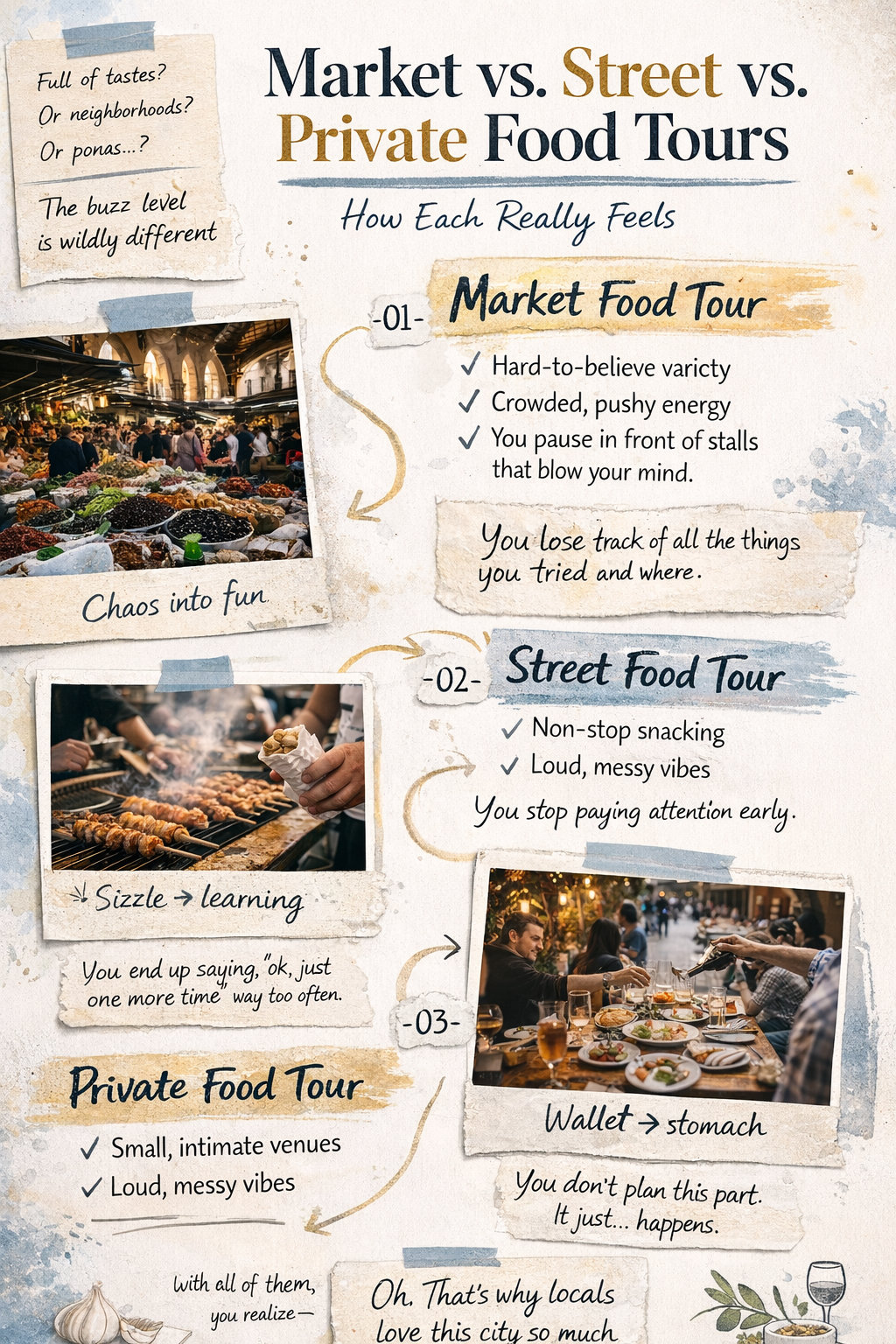
This part never really shows up in the listings.
You scroll through a few tours and they start blending together. Same areas, same timing, roughly the same price. It feels like you could pick any of them and get more or less the same day.
Sometimes you’re barely stopping. Quick bite, quick explanation, move again. You check your phone once, thinking you missed something… but no, the group is already halfway down the street.
Other times, you sit longer than expected. Someone orders an extra drink. The guide doesn’t rush it. You forget how long you’ve been there.
| What changes | Market-focused tours | Street food tours | Chef-led tours | Private tours |
|---|---|---|---|---|
| How you move | Short loops, more time inside markets | Longer walks between stops | Balanced, but slower overall | Adjusted as you go |
| Pacing | You linger without noticing | Faster, more back-and-forth | Deliberate, almost stretched | Changes on the spot |
| Focus | Everyday food, what locals actually buy | Variety, easy things to try quickly | Ingredients, context, small details | Whatever you lean toward |
| Guide role | Talking as you walk, pointing things out mid-step | More relaxed, a bit social | More structured, stories come in layers | Feels more like a conversation |
| Overall feel | Dense, slightly chaotic | Loose, moving constantly | Slower, more focused | Flexible, a bit quieter |
Two tours can look almost identical online and still land completely differently.
One keeps you moving the whole time. Another makes it feel like you barely moved at all.
How Food Tours Actually Move Through the City
Thessaloniki doesn’t spread out in a way that forces long distances.
You stay inside the same few blocks more than you expect. It sounds small. It isn’t.
You turn a corner, then another, and suddenly you’re back near where you started… but it feels like a different place entirely.
-
Market-heavy routes
You stay inside longer, weaving between stalls, stopping often -
City-walk routes
More movement, shorter pauses, streets start blending together -
Longer formats
The same area stretches out, more sitting, more time to settle
That is why route descriptions can be misleading. A tour can mention the same core stops as another one and still feel very different once timing and pacing are added.
The stronger tours don’t try to add more stops. They just use the same space better. Timing shifts, pauses feel right, nothing feels forced.
Price Reality: What You’re Actually Paying For
Prices sit close together, which makes everything harder to read at first.
| Price level | What it usually reflects | What it feels like |
|---|---|---|
| Lower range | Standard shared format | More movement, quicker stops, less time to sit |
| Mid range | Better balance in the route | Pacing softens, stops feel less rushed |
| Upper shared range | Longer time or more guide involvement | You stay longer, explanations come in naturally |
| Private | Control over timing and flow | The same places, but everything bends around you |
The actual food stops may overlap more than you would expect. What changes more often is the rhythm around them — how long you stay, how much walking sits between them, and how much explanation the guide adds.
When prices drift apart, it’s usually about how the tour moves — how long you stay, how much you walk, how much space you get. Not entirely different places.
- Market vs street → see the difference
- Private tours → check the premium option
- Price breakdown → compare cost bands
- Self-guided route → do it yourself
How to Choose Without Overthinking It
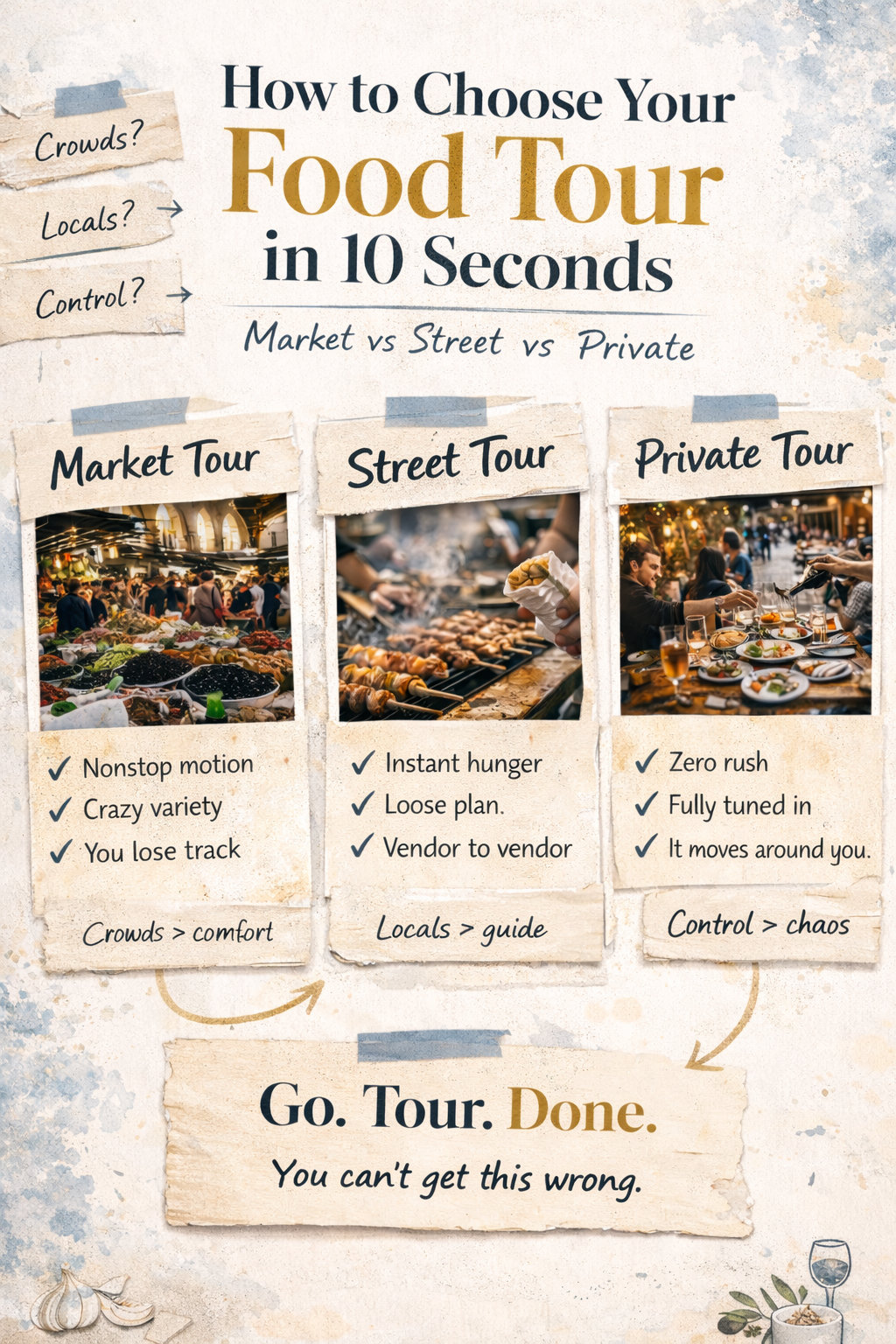
After a while, looking at more options doesn’t help much.
They start to feel interchangeable again.
Better to step back and just pick the shape of the day you want.
-
Short trip:
Go with a simple 3-hour tour and leave space for the rest of the day -
Food-focused trip:
Pick something longer where you can actually sit and eat -
First visit:
Stay close to routes that clearly pass through the main markets -
Already been here:
Look for slower formats or something more specific -
With others:
Private only starts to make sense if flexibility matters more than cost
It’s easy to get stuck comparing small details that don’t change much. Picking the right pace and format matters more than finding a perfect listing.
What to Look for in Thessaloniki Food Tour Reviews
Ratings help less than they seem to. In Thessaloniki, many food tours score highly, so the useful difference usually appears in the wording of reviews rather than in the headline number.
-
Read how the tour feels
People mention pace without trying to — rushed, relaxed, too many stops, not enough time -
Pay attention to the guide
Names come up. Stories come up. Sometimes that’s the whole experience right there -
Watch for repeated details
Same dish, same market corner, same comment about timing — you notice patterns after a while -
Check how structured it sounds
Some routes move cleanly. Others drift a bit, more chatting, less direction -
Look at volume, not just rating
A place with hundreds of reviews feels steadier than something with twenty perfect ones
At some point you open two tabs side by side. Same price. Same length. You try to spot what’s actually different… and it’s not obvious right away.
Then you catch it in the wording. One feels tight. The other wanders.
Is a Food Tour in Thessaloniki Worth It?
Usually, yes. Just not for the reason you expect at first.
You can eat well on your own here. That part comes easy. You walk a few streets, smell something good, stop without thinking too much.
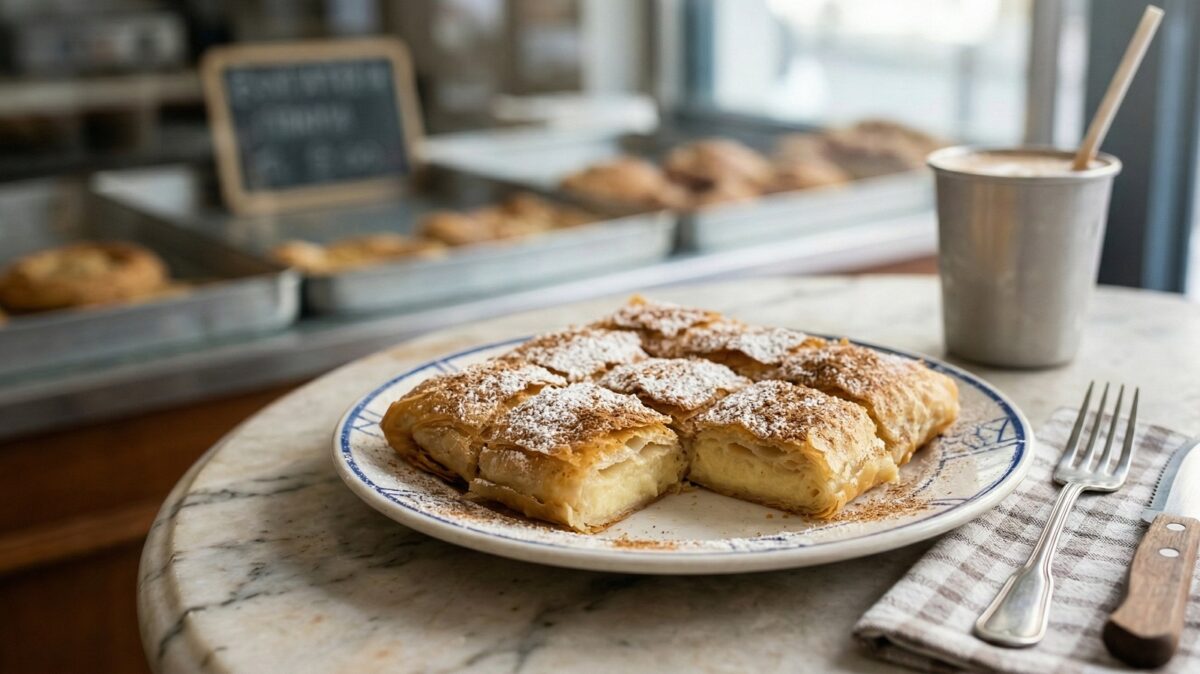
What takes longer is figuring out how the day fits together.
What takes longer on your own is not finding food, but understanding how the center, the markets, and the better stops fit together during the day.
A tour cuts through that.
You don’t pause to think about where next. You just follow along, and suddenly the city starts to make sense — how the market spills into side streets, why one spot is busy early and empty later.
When a food tour makes sense
- Right at the start, when you’re still checking directions every few minutes
- If you want a clear route instead of piecing one together on the go
- When you care about context, not just eating and moving on
When you might skip it
- If you’ve already walked these streets before and know your spots
- If you like drifting without a fixed plan
- If you’re chasing one specific thing and nothing else
It often works best early on.
You get your bearings, pick up a few places you’d never find on your own, then the rest of the trip opens up a bit.
If you want orientation, local context, and a structured first look at the city, a food tour is usually worth it. If you already know Thessaloniki well or prefer wandering without a schedule, it may be less essential.
Frequently Asked Questions
How much do Thessaloniki food tours cost?
You’ll see a familiar range across most shared tours. The gap usually comes from how long you’re out, how big the group is, how many stops they squeeze in. Private ones cost more, but it’s mostly about moving at your own pace, not going somewhere completely different.
Are market tours better than street food tours?
They feel different once you’re in them. Markets get dense fast — smells, noise, tight paths. Street food walks stretch out more. Easier to follow, less intensity.
Which tour is best for first-time visitors?
Anything that runs through the market tends to work well. You get a rough mental map without trying too hard.
Are private food tours worth it?
They can be. You slow down where you want, skip things without awkward pauses. The route doesn’t change much — the pace does.
How long should a food tour be?
Around three hours feels right. You eat enough, walk enough, and don’t hit that point where everything starts to blur together.
Final Thoughts
At first it looks like you’re choosing between completely different experiences.
Then you walk the area a bit and realize — they all pass through the same streets.
What changes is how they move.
Some stop longer. Some keep things quick. Some talk more, some let you just eat and go.
Once that clicks, the decision gets lighter.
Pick the format that fits your trip. The rest sorts itself out once you’re actually there.