

You don’t notice it immediately.
You’re walking somewhere — toward the center maybe, or just following a street that feels busy enough to trust — and then this smell catches up with you. Not sweet exactly. Warm. A little buttery. Somewhere between fresh bread and dessert, though neither one really fits.
Then you see it in people’s hands.
They’re not sitting down. Not turning it into a stop. Just standing outside a small shop with paper folded back, eating fast like this is still part of getting somewhere else.
That’s usually how bougatsa enters the day.
This isn’t some neat dessert pause. It’s breakfast. Quick, hot, a bit messy, and usually gone before you’ve even decided where to walk next.
What Bougatsa Actually Is (Without Turning It Into a Definition)
The more neatly you describe it, the less accurate it starts to feel.
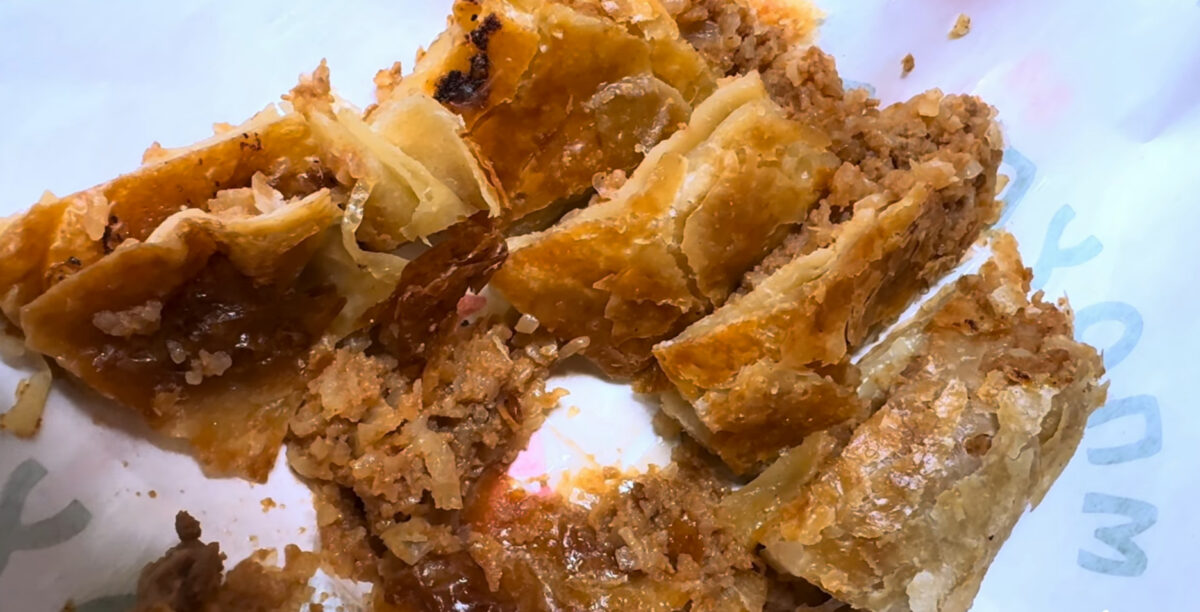
A pastry. A pie. Something sweet. None of that really holds once it’s warm in your hands and falling apart onto the paper.
It’s layered, yes. Thin sheets stacked tight enough to crack when you press into them. Not delicate-flaky. More abrupt than that. It breaks, shifts, leaves little pieces behind if you’re not paying attention.
Inside, it softens.
The filling is warm, sometimes sweet, sometimes savory, and a little looser than you expect at first. That contrast is what makes bougatsa work. Crisp outside. Soft center. A bit of resistance, then none.
| Part | What it does |
|---|---|
| Phyllo layers | crisp, slightly oily, breaks apart the second you start eating |
| Filling | soft, warm, gives the whole thing weight instead of just crunch |
| Finish | powdered sugar, sometimes cinnamon — shaken on quickly right before it lands in your hands |
You don’t cut it yourself.
It’s already being cut while you’re still deciding. Quick, practiced movements. Squares that aren’t really even, because they don’t need to be. Then onto the paper, folded once, passed over the counter. You step aside almost automatically because the next person is already leaning in to order.
It sounds small, that part.
But it tells you a lot about how bougatsa actually lives in the city.
Why It’s Everywhere in Thessaloniki
You don’t really hunt for bougatsa in Thessaloniki.
You run into it.
A corner shop. A narrow street you took because it looked busier. A tray behind glass that’s already half empty by the time you notice it. You think you’ll come back later, then realize later won’t feel the same.
You don’t “go for bougatsa” here. You meet it on the way somewhere else — before coffee, after a short walk, on the edge of the market, when stopping for five minutes feels easier than pretending you’re not hungry.
It settled into the city long ago, carried over, reshaped a little, repeated until it stopped feeling imported and just became part of the morning.
Not preserved behind glass. Used.
That’s probably why it stayed.
It fits Thessaloniki early in the day. Quick stops. Short pauses. Food that doesn’t ask for a table, a menu, or much thought. You notice a shop, glance inside, see what’s left on the tray, and that’s usually enough.
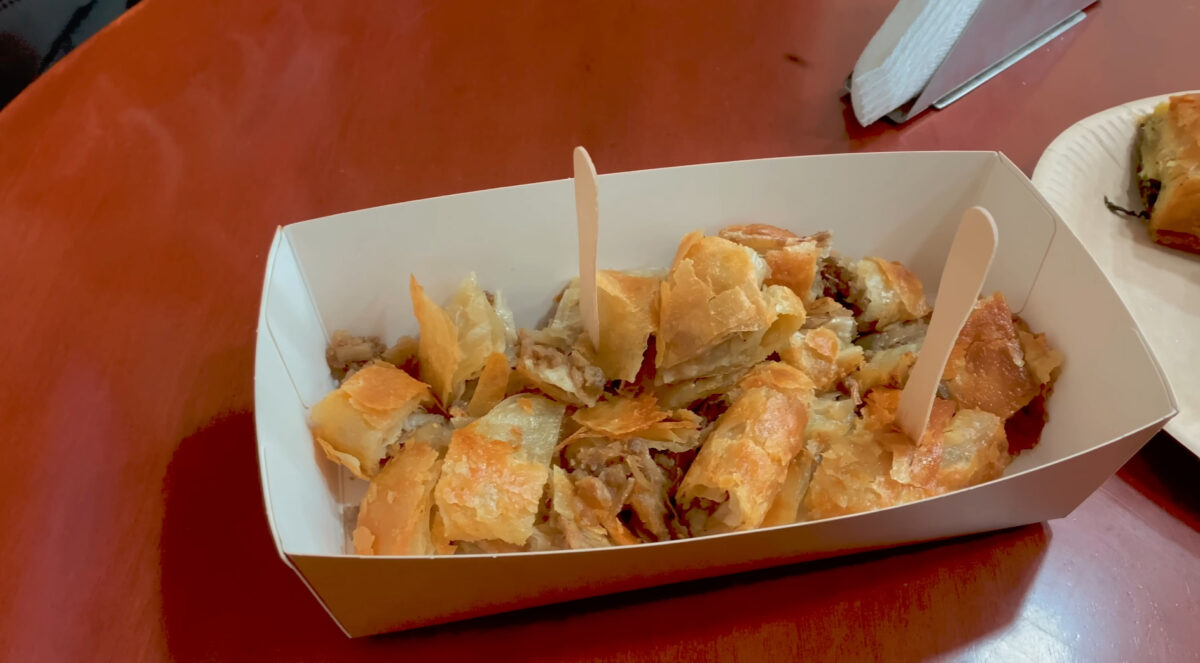
Sometimes you eat it standing a few steps away because there’s nowhere obvious to sit. Sometimes you keep walking and regret that immediately when the paper shifts and a few pieces drop. Sometimes you go in for one small portion and end up wishing you’d asked for more.
You don’t plan bougatsa very carefully here.
You just stop not skipping it.
How You Actually Eat Bougatsa
There’s a small pause right after they hand it to you.
You step aside, still close to the shop. Paper already warm. Warmer than you expected. You shift it from one hand to the other, almost immediately.
People keep moving.
Standing still for too long feels off. Someone brushes past, you take half a step forward, then another. You either start eating there or you’re already walking.
-
Early, not late
you notice the trays in the morning — by afternoon it feels like you missed something -
Standing or walking
you eat it while moving, not sitting somewhere comfortably -
Eat it hot
you feel it in your hands — that’s the window -
Don’t overthink the order
you point, they cut, you’re already stepping away before thinking twice
The first bite doesn’t stay clean.
The top cracks. Sugar drops faster than you expect. You glance down for a second, then stop caring. It’s softer inside than it looked. You adjust — tilt it slightly, grip it tighter, keep going.
If you’re still holding it ten minutes later, something went wrong.
After a few bites, you stop noticing the mess.
You’re just walking. Eating. Maybe checking your direction for a second, then putting the phone away again because your hands are full.
It becomes part of the movement.
Cream vs Cheese vs Savory (What You’ll Actually Notice)
At first, it looks like you need to choose carefully.
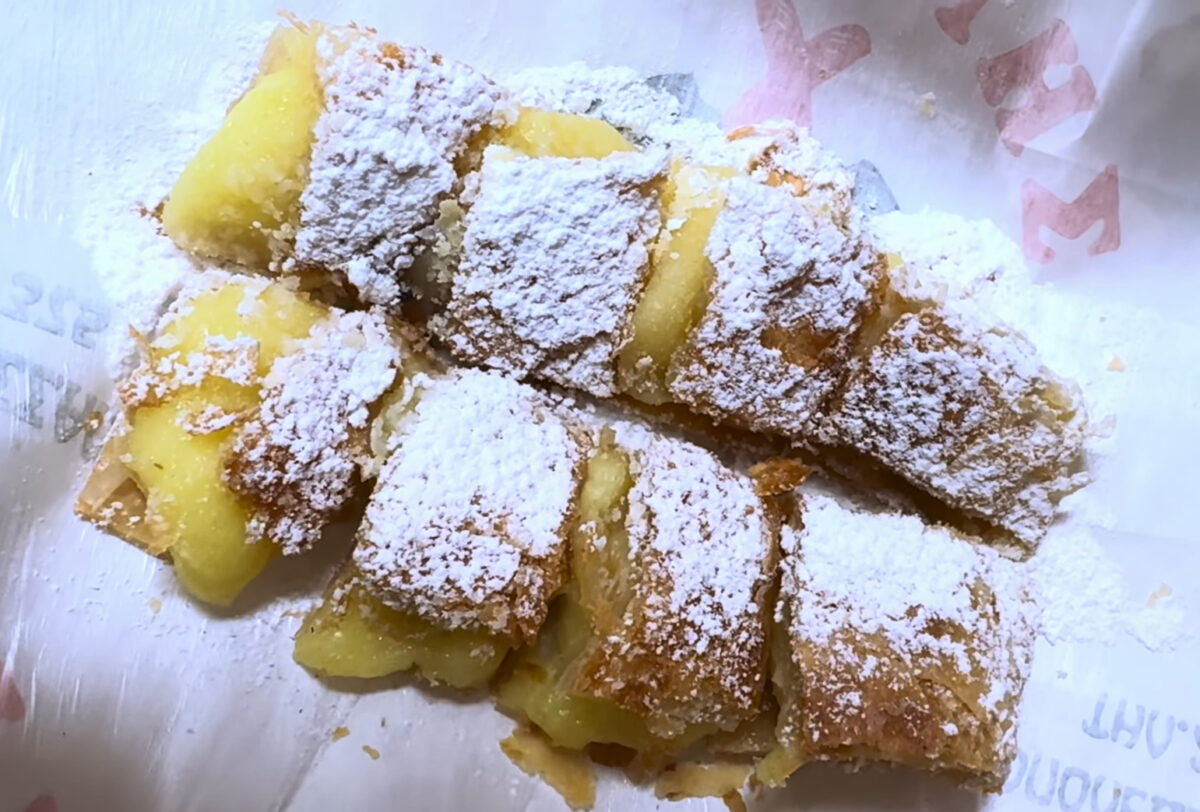
You stand there, glance at the trays, hesitate for a second like it matters more than it does.
It doesn’t.
You only start noticing what you picked once you’re already a few bites in. How soft it is. How quickly it disappears. If you slow down halfway or keep going without thinking.
| Type | Texture | When it works |
|---|---|---|
| Cream | soft, slightly sweet, almost loose | first try, easy, no hesitation |
| Cheese | firmer, saltier, more grounded | when you want something less sweet, still light |
| Savory | heavier, more filling | when you skipped eating earlier and feel it |
You’ll probably go for cream first.
It matches what you imagined before arriving.
Then later — maybe the next morning — you point at something else without thinking too much about it. Cheese starts to make sense. Especially if you’ve already been walking a while, already eaten a few things, not really stopping anywhere.
Savory sits a bit differently.
You notice it more. You slow down slightly, even if you didn’t plan to. It fills the gap in a different way.
None of this needs planning.
You just point. They cut. You step aside, check where you’re heading next, and keep moving.
Where to Eat Bougatsa (Without Chasing “Top 5” Lists)
You can search for it.
Names pop up. Maps fill with pins. You zoom in, zoom out, save a few spots you’ll probably never open again.
Then you’re actually there — standing on a street that all look the same — and none of it really helps.
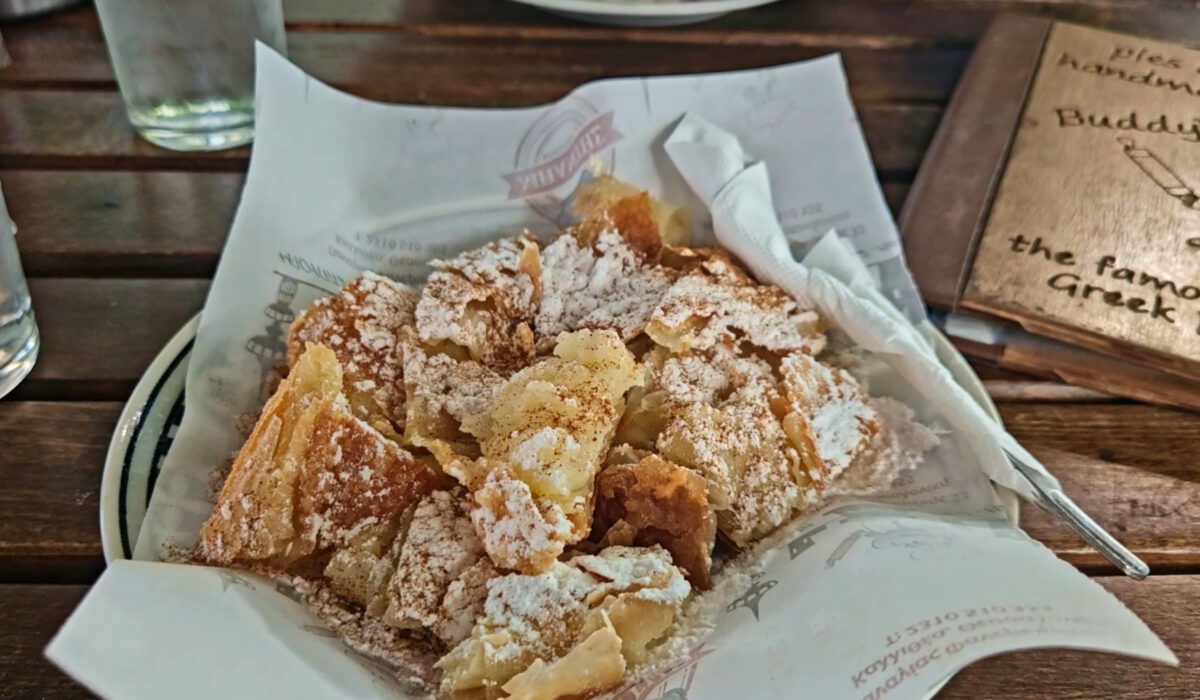
The places that matter don’t stand out. You walk past one, almost miss it, then notice people stepping in and out in under a minute. No signs pointing anything out. Just a counter, trays stacked behind glass, someone already paying before you’ve figured out what you want.
Fresh tray. Fast turnover. Nothing fancy. If it looks too clean, too styled… you hesitate a bit.
You stop looking for names after a while.
You start watching movement instead.
Near the markets, it’s faster. You see a tray come out, still steaming, and it’s half gone before you’ve even stepped inside. You check your phone once, put it away. No point.
Smaller places feel easier to trust. Not always — you get it wrong once or twice — but then you start noticing the rhythm. Short lines. Quick hands. No one lingering.
And timing… that sneaks up on you.
Early works. You grab it, eat it walking, still too hot at first. Midday, you hesitate a second longer at the counter. Later — it’s there, but it’s not the same thing anymore.
Where It Shows Up in a Food Tour
On a food tour, this is usually how things begin.
You’re still figuring out the group. Someone’s adjusting their bag, someone else asking a question. Then it’s handed to you — no big setup.
| Moment | Role |
|---|---|
| Start of tour | you take a bite, still half-listening, already moving |
| Before Kapani | a quick warm-up before everything gets heavier |
| Street segment | something you eat while trying to keep up with the group |
No chairs. No pause.
You’re chewing while crossing the street, trying not to drop anything, catching the next turn a second late.
It pulls you in without asking.
Common Mistakes
-
Waiting too long
you take a few photos, check directions… and it cools faster than you expect -
Picking by looks
the neat tray catches your eye, but the one next to it was just pulled out -
Treating it like dessert
you save it for later, then it feels slightly out of place
Nothing dramatic.
Just small misses. You notice them after.
So… Should You Go Out of Your Way for It?
Not really.
You won’t plan your route around it. You won’t cross the city just for one piece.
But then you’re walking, not even thinking about food, and you see it again — same trays, same quick rhythm — and you stop without deciding to.
It slips into the day.
You don’t schedule bougatsa. You just don’t walk past it twice.
Later, when you think back, it’s usually one of the first things that comes up.
Not because it stood out.
Because it fit too easily into everything else.
- Food tours → see options
- What else to eat → food guide
- Street tours → see tastings
- DIY route → route guide