
It looks like an easy call at first.
You’re heading to Thessaloniki. You’ve heard about the food. So yeah, a food tour… seems obvious.
You think about it for maybe ten seconds.
Then the price pops up.
And you pause.
Not “what will I eat?”
More like — do I actually need this?
Because once you stop scrolling and picture it, the doubt creeps in fast.
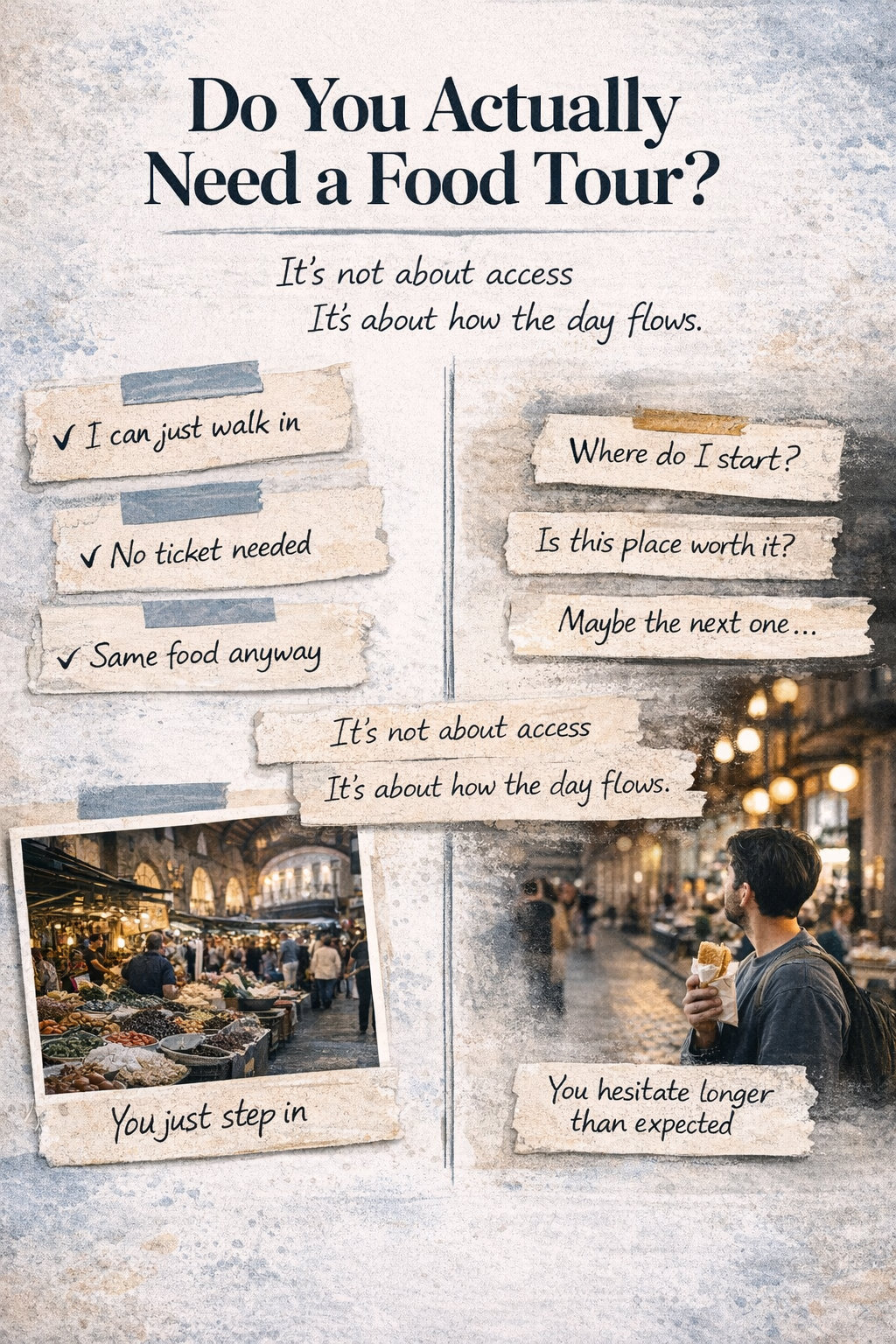
You can walk straight into Kapani Market on your own. No ticket. No guide. Just step in. Same with Ladadika — pick a table, sit down, order whatever looks right. Coffee, pastries, grilled stuff, small plates. No one stopping you.
So why pay extra for something you can already do?
That part usually gets brushed past.
Straight to “yes, worth it.” No real pause.
The honest answer isn’t that clean.
Sometimes it works really well.
Sometimes it just… doesn’t add much.
A Thessaloniki food tour makes sense when it fixes something in your trip — time, structure, or that feeling of not knowing where to start.
If you don’t feel that, you can eat just as well on your own and spend less.
Quick decision
- Do a tour → if you want a structured, efficient first experience
- Skip it → if you enjoy exploring and have time to figure things out
- Best timing → first day in the city
- Worst timing → last day, when you already understand the layout
Why This Question Even Comes Up
It comes up because food isn’t hidden here.
You see it everywhere. Windows open, trays out, people already eating. You don’t need instructions to get started.
You just walk in.
No ticket barrier. No entry point. No “only with a guide” moment.
That makes it harder to justify paying for help.
You stand at the edge of a market, look around, think — I can just do this myself.
And you’re not wrong.
But then you take a few steps in.
You slow down. Look left, right. Try to decide where to stop first. Check your phone. Open reviews. Close them again. Everything looks good. Nothing stands out enough.
You drift a bit longer than expected.
Comparing the cost of food to the cost of a tour almost always makes the tour feel overpriced.
But you’re not just paying for what’s on the plate.
What a Food Tour Actually Changes
Picture the same afternoon twice.
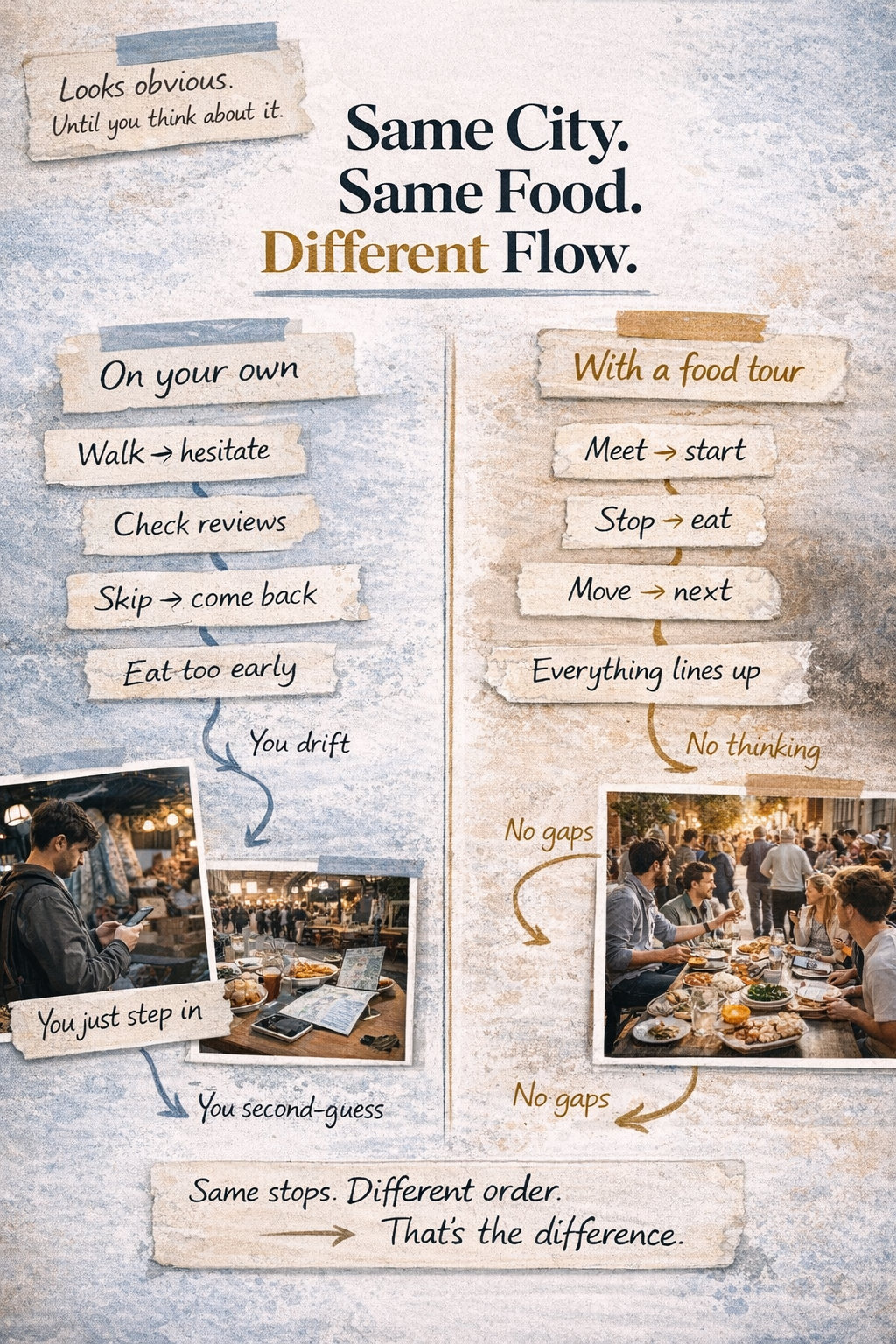
First version — you’re on your own.
You walk, stop, hesitate. Something looks good, but you’re not sure if it’s worth sitting down. You skip it. Ten minutes later you circle back. Then you realize you’re already a bit full, but you haven’t really had anything proper yet.
You check the map again.
Second version — the path is already there.
You follow. Stop when the group stops. Eat what’s handed to you. Move on. No checking, no circling back. You don’t even notice how far you’ve walked until you glance at the time and it’s already later than you thought.
Same city. Same food.
Completely different flow.
That’s what you’re paying for.
- It removes hesitationYou don’t stand there deciding where to go next.
- It fixes the orderThe stops line up so you don’t get full too early or miss things.
- It reduces wrong turnsYou skip places that look better than they are.
- It keeps you movingNo long gaps between decisions.
- It adds contextYou hear things you wouldn’t pick up just by sitting and eating.
It sounds small.
You notice it halfway through.
You’re not thinking about what’s next anymore.
The Core Trade-Off Most People Miss
People usually frame it the wrong way.
Like it’s food versus no food tour.
That’s not really what’s happening.
You’re choosing how much effort you want to put into the day.
One version — you build it yourself.
You decide where to go, when to stop, what to skip. You adjust as you go. Sometimes it works out great. Sometimes you waste time figuring things out.
The other version — you follow something already built.
You give up control, but you don’t spend energy planning every step. You just move through it.
A food tour isn’t access to food.
It’s a way to avoid organizing the experience yourself.
Most food tours in Thessaloniki include places you could visit on your own.
What you’re actually paying for is the order, timing, and flow — not access.
Once you look at it like that, the answer gets clearer.
If you like wandering, adjusting, getting slightly lost, finding places on your own — you might enjoy skipping the tour.
If you don’t feel like doing that, or you only have a short window and don’t want to spend it deciding, the tour starts to make more sense.
You’ll feel it pretty quickly either way.
Usually within the first hour.
- Best tours → top options
- Compare formats → see difference
- Do it yourself → route guide
- Check prices → see cost
Food Tour vs Going on Your Own
You end up thinking about this at some point anyway.
Not in a big, planned way. More like standing on a corner, checking your phone, wondering if the next place is worth the walk.
It sounds simple. Follow a tour — or just do it yourself.
But once you’re actually out there, it splits pretty quickly.
You can walk the same streets, stop at similar places, spend less. That part is real. No question.
The day around it feels different though.
| Factor | Food tour | On your own |
|---|---|---|
| Route | Pre-built and tested | You piece it together as you go |
| Time use | Tight, continuous | Stops and gaps, sometimes longer than planned |
| Food flow | Sequenced | Easy to misjudge |
| Decision-making | Almost none | Constant small choices |
| Flexibility | Limited | Full control |
| Total cost | Higher upfront | Lower, but drifts |
That food flow part — you notice it later.
On your own, it’s easy to get it slightly off. You stop early because something looks good. Eat more than planned. Then two stops later, you’re not really hungry anymore but still feel like you should try something.
Or the opposite. You walk too long. Skip places. Keep thinking “next one will be better.”
It doesn’t fall apart completely. Just… doesn’t line up cleanly.
Same stops, different order — the whole day shifts. You feel it halfway through, not at the start.
Where DIY Usually Falls Apart
Doing it yourself works. Until it doesn’t.
You start strong. First stop feels right. Second one too. Then you check directions again. Walk a bit longer than expected. Miss a turn. End up circling back without planning to.
You notice it — small hesitations.
“Maybe this place.”
“Or keep going.”
You stand outside a spot for a few seconds longer than needed, trying to decide.
None of it feels like a problem in the moment.
Later, it stacks up.
- You spend more time deciding than actually eating
- Stops bunch together or spread too far apart
- You walk past places you would’ve liked, just not at the right moment
- You lose appetite too early or too late
- You settle into something that’s fine, but forgettable
It’s not about access. Everything is there.
It’s about timing. And small choices adding up.
What a Tour Does Better — In Practice
When a tour works, you stop thinking about what’s next.
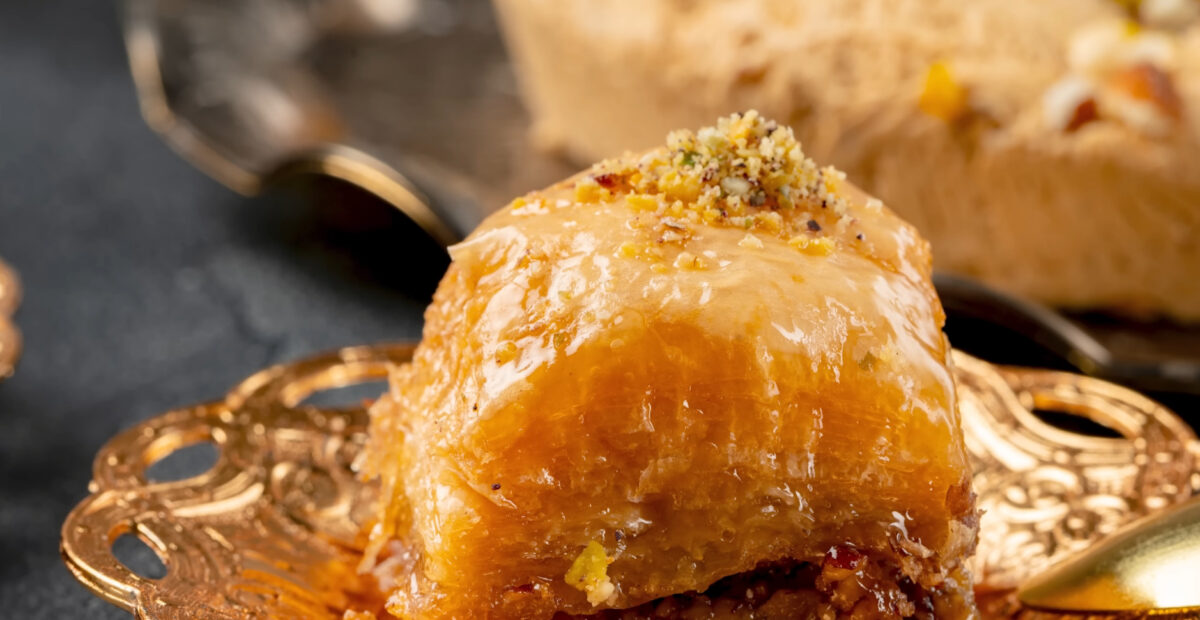
You follow. That’s it.
No map checks every ten minutes. No backtracking. No standing outside places trying to read menus and decide quickly.
You just move.
- It keeps rhythmNo long pauses between stops. You don’t feel the gaps.
- It removes frictionNo need to figure out routes, timing, or how to order.
- It connects stopsEach place makes sense after the last one.
- It builds context quietlyThings start to make more sense without you trying to piece it together.
You notice something else too.
Time moves differently. You look up and it’s already been a couple of hours.
No gaps. No stalls.
What Doing It Yourself Still Does Better
Still — some things only happen when you’re on your own.
You turn down a street without planning it. Something catches your eye. You stop. Stay longer than expected. No one’s waiting.
| DIY advantage | What it changes |
|---|---|
| Freedom | You stop, skip, or stay without explaining anything |
| Pacing | The day stretches or compresses on its own |
| Discovery | You find places without being led to them |
| Cost control | You decide each spend, one by one |
You might end up somewhere you didn’t expect. Sit longer. Order something random. It works out — or not really. Still part of it.
That unpredictability is the point for some people.
Others get tired of it halfway through the day.
If you enjoy figuring things out as you go — checking maps, adjusting, changing direction — doing it yourself will feel natural. If that starts to wear you down after a while, a tour makes the day easier.
That’s the split.
Not food quality.
Not price by itself.
Just how you want the day to unfold once you’re out there.
Should You Do a Food Tour — Quick Reality Check
| Your situation | Do a tour? | Why |
|---|---|---|
| 1–2 days in Thessaloniki | Yes | You save time and avoid slow start |
| First day | Yes | Helps you understand the city faster |
| 3+ days, relaxed trip | Maybe not | You can build it yourself |
| You enjoy exploring | No | The process is part of the experience |
| You hate planning | Yes | The tour removes friction |
When a Thessaloniki Food Tour Is Actually Worth It
By this point, it starts to feel less theoretical.
You’ve seen the listings. Maybe even opened a few maps, zoomed in, tried to guess how it all connects. It looks simple at first.
Then you land in the city and hesitate for a second.
That’s usually where a food tour either clicks… or doesn’t.
It’s not automatically worth doing just because the city has good food. It starts making sense when it fixes something in your day — when it removes friction you’d otherwise feel.
And those moments are easy to spot once you’ve been there for a few hours.
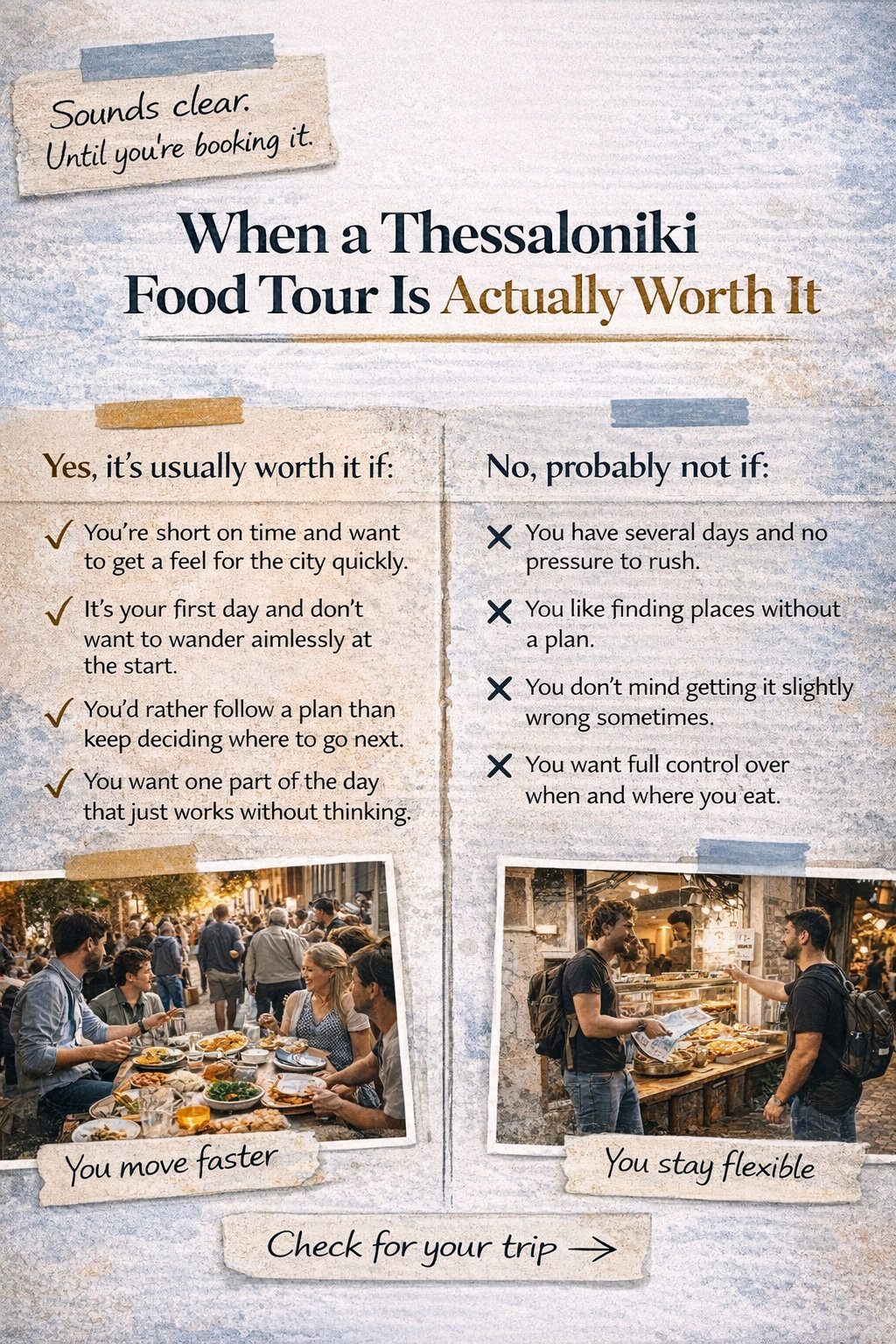
It usually makes sense if:
- You’re short on time and want to get a feel for the city quickly
- It’s your first day and you don’t want to wander aimlessly at the start
- You’d rather follow a plan than keep deciding where to go next
- You want one part of the day that just works without thinking
- You’re not in the mood to research places in advance
On a short trip, the first few hours can drift. You walk, stop, check your phone, walk again. Maybe you pass three places and still don’t go in.
With a tour, that part disappears.
You just show up. Start walking. Someone else sets the direction.
At some point you realize you haven’t checked your map in a while.
On a tight schedule, it works more like a shortcut into the city. Not just food — orientation, rhythm, a sense of how things connect.
When It’s Probably Not Worth It
There are days when it adds very little.
You feel it pretty quickly if that’s the case.
It usually makes less sense if:
- You have several days and no pressure to rush
- You like finding places without a plan
- You don’t mind getting it slightly wrong sometimes
- You want full control over when and where you eat
- You’re keeping a close eye on food spending
If you enjoy just walking and seeing what happens, Thessaloniki doesn’t fight you on that.
You turn into a street, spot something small, go in without thinking too much. Sit longer than planned. Or leave early.
You might check directions once, then ignore them and keep going anyway.
That kind of day doesn’t really need structure.
If you’re comfortable drifting through the city and adjusting as you go, adding a guide doesn’t always improve the experience. It just changes the pace.
The Real Trade-Off: Time vs Money
If a food tour saves you 2–3 hours of wandering and wrong choices, many travelers find it worth the price.
Strip everything else away and it comes down to something simple.
Time or money.
A tour costs more upfront. You feel that immediately.
But it clears out a lot of small decisions — where to go, what to try, how long to stay, what’s worth skipping.
Doing it yourself saves money. You pay for it in attention instead. Small choices, one after another.
Sometimes you pick well. Sometimes you don’t.
You’re not paying to access food. You’re paying to smooth out the day — fewer pauses, fewer resets, less second-guessing.
If that shift matters to you, it lands well. If not, you can just walk and let things unfold.
So, Should You Do a Food Tour in Thessaloniki?
For a lot of trips — yes.
But not automatically.
It works best when you want a clean start. Something structured. A few hours where you don’t have to think about logistics.
It fades in value when you already enjoy figuring things out as you go.
That’s really the line.
Not whether tours are good or bad. Just whether they solve something for you that day.
If they do, you’ll feel it almost immediately.
If not, you’ll probably drift off mentally halfway through and start planning your next stop anyway.
- Best tours → top options
- Compare formats → see options
- Do it yourself → route guide
- Check prices → see cost